AI Glasses | Regulation
Australia is considering a pause on camera-glasses imports over covert filming fears
Australia’s government is considering restrictions on imports of camera-enabled smart glasses while privacy rules catch up with wearable recording. No import ban has been agreed, and new draft privacy laws stop short of one.
By AIWearHQ Editorial Team | Published 31 August 2026
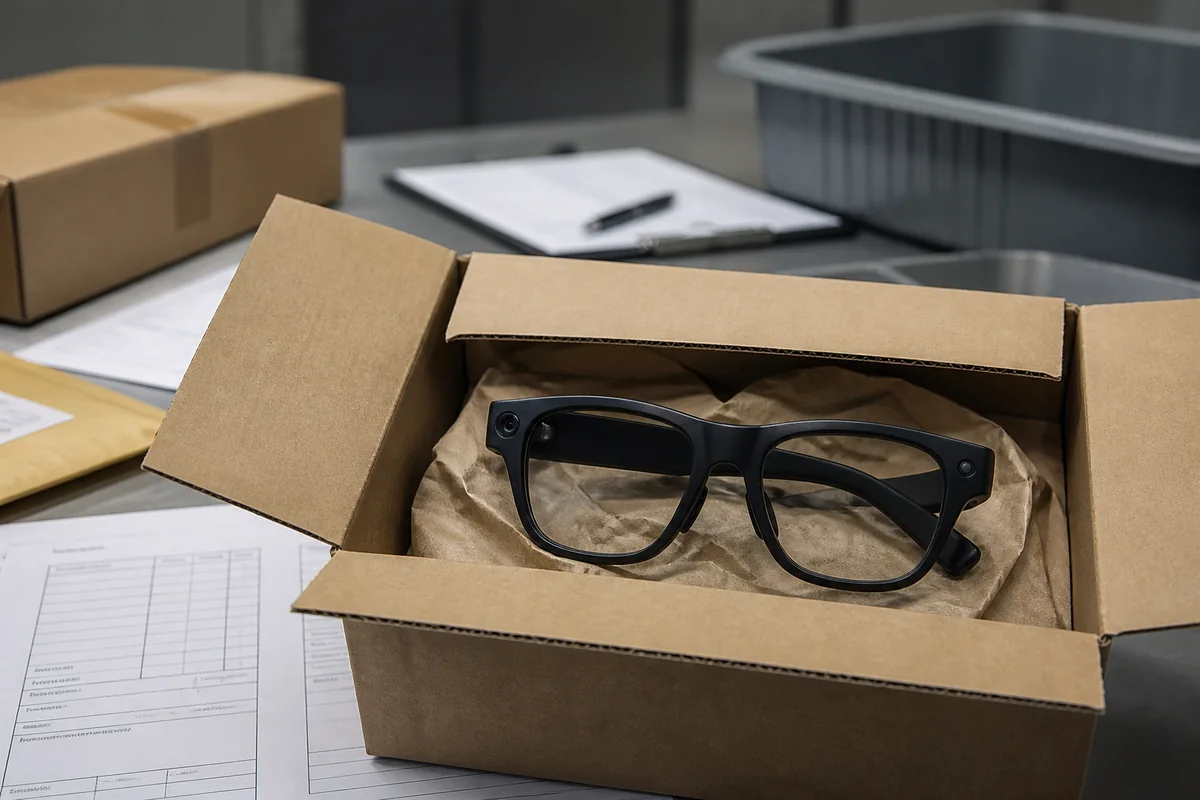
Australia’s federal government is considering whether imports of camera-enabled smart glasses should be temporarily restricted amid growing concern about people being recorded without their knowledge.
Social Services Minister Tanya Plibersek confirmed on Sunday, 30 August that the government was looking closely at an import moratorium. She said Australia’s Attorney-General had already asked the country’s Privacy Commissioner to examine smart glasses specifically and would have more to say about imports shortly.
A day later, Attorney-General Michelle Rowland released a consultation paper and draft privacy legislation covering emerging technology, including AI and smart glasses. The proposed reforms would tighten consent standards and require companies to show that their collection and use of personal information is fair and reasonable. They don’t impose an import pause, and the government still hasn’t published the scope or duration of any restriction it might introduce.
There is, however, already a separate proposal on the table. Legislation announced by the Australian Greens on 27 August would impose a 12-month ban on imports of camera-enabled wearable devices while broader privacy protections are developed. It includes an exemption for genuine disability aids.
The government hasn’t committed to adopting that bill, so reports that Australia has decided to ban smart glasses are getting ahead of events.
This has moved beyond a cinema or swimming-pool rule
Smart glasses have been running into restrictions at individual locations for some time, usually because an organisation wants a straightforward rule for environments where recording is sensitive. Australia is now discussing something considerably broader.
Australia’s Privacy Commissioner, Carly Kind, published a detailed intervention earlier this month arguing that wearable cameras create questions the country’s existing law doesn’t always handle neatly. The Privacy Act generally applies to businesses and government agencies rather than individuals. That becomes awkward when one person records another using a device that stores footage locally.
Kind also drew a distinction between fixed surveillance, where people may have some awareness that cameras are operating, and a recording device moving around on somebody’s face. It’s a distinction worth taking seriously without assuming everyone wearing camera glasses is trying to film people secretly.
A phone can obviously be misused as a camera too, but holding one towards somebody usually gives them a reasonable clue about what might be happening. Smart glasses reduce that physical signal. Recording indicators are meant to provide another one, although they only help when people can see them and understand what they mean.
Recording lights are now part of the political argument
Plibersek specifically raised concern about glasses where the filming indicator can potentially be disabled or obscured. There needs to be some care around that point because camera glasses don’t all work in the same way.
Meta has just strengthened the capture-light safeguards on its own glasses, including stopping an active recording when the outward-facing indicator is covered. Other inexpensive camera glasses may use different indicators or offer much weaker protections.
That variation is one reason regulating an entire product category becomes complicated fairly quickly. The Greens proposal is at least more specific than simply banning anything described as “smart glasses”. Its published wording targets wearable devices with integrated cameras, rather than camera-free display glasses such as Even Realities G2 or audio-only smart eyewear.
The distinction is important. Navigation displays, live captions, translation and other smart-glasses functions don’t inherently involve recording the people around the wearer.
Britain is taking a different approach
There’s no equivalent UK plan at present. In a written parliamentary answer on 23 June, the UK Government said it had no current plans for legislation specifically regulating camera-enabled smart glasses used for filming in public. It pointed instead to existing offences covering harmful conduct, including harassment, stalking and voyeurism, as well as rules around sharing intimate images.
The Government also said it didn’t want to prevent lawful private or domestic use where other people weren’t being harmed. That doesn’t stop individual cinemas, workplaces, schools or venues from setting their own conditions of entry, and it doesn’t make every recording in public acceptable. It does show a different regulatory philosophy.
Britain is currently concentrating largely on behaviour and harm. Australia is considering whether the availability of the hardware also needs intervention, while putting broader privacy reforms out for consultation. Neither approach has had much time to prove itself.
An import pause would bring awkward questions of its own
Stopping new camera glasses entering a country for 12 months sounds simple enough. The details wouldn’t be.
Existing owners would still have their glasses. Conventional cameras and phones would remain everywhere. Manufacturers producing strong outward recording indicators could be treated the same as obscure models offering little or no protection.
There are legitimate uses to consider too, particularly around accessibility. Camera-equipped AI glasses can read text, describe surroundings and connect blind or low-vision users with remote assistance. The Greens proposal recognises that by including a disability-aid exemption, although how it would work in practice would still need to be defined.
Then there’s the definition problem. A workable rule would need to distinguish a pair of camera glasses from display-only eyewear, prescription products, accessibility devices and whatever new wearable format manufacturers come up with next year. Banning the phrase “smart glasses” wouldn’t get very far.
Product standards may ultimately prove more practical than a blanket prohibition. Mandatory outward-facing recording indicators, anti-tamper requirements, clear storage controls and stronger rules for captured footage could all address specific problems without treating the hardware itself as the offence. Australia hasn’t announced that approach, but its new privacy consultation gives some of those questions a formal route into government policy.
What happens next matters beyond Australia
The immediate things to watch are the Attorney-General’s next statement on imports and the privacy consultation, which runs until 18 September. The government has moved from acknowledging privacy concerns to putting broader reforms on paper, but we still don’t know whether that will be joined by a moratorium, a narrower set of product requirements or no import restriction at all.
For UK owners, nothing changes. Camera glasses remain legal to buy and use, subject to existing law and whatever rules apply in the place where they’re being worn.
The wider significance is harder to ignore. Camera-equipped AI glasses are trying to move from niche gadget to ordinary eyewear, and governments are now being asked whether rules written before cameras could sit quietly at eye level all day are still adequate.
Australia hasn’t answered that question yet. The fact it’s seriously considering an import restriction shows that manufacturers may need to do more than convince customers that smart glasses are useful. They’ll also need regulators, venue operators and the people standing nearby to be comfortable with them.