AI Glasses | Feature
Beware the cheap imitations: what to check before buying budget AI glasses
Budget smart glasses can advertise the same cameras, translation and voice features as premium rivals. The important differences are often hidden in the software, privacy controls, build quality and support.
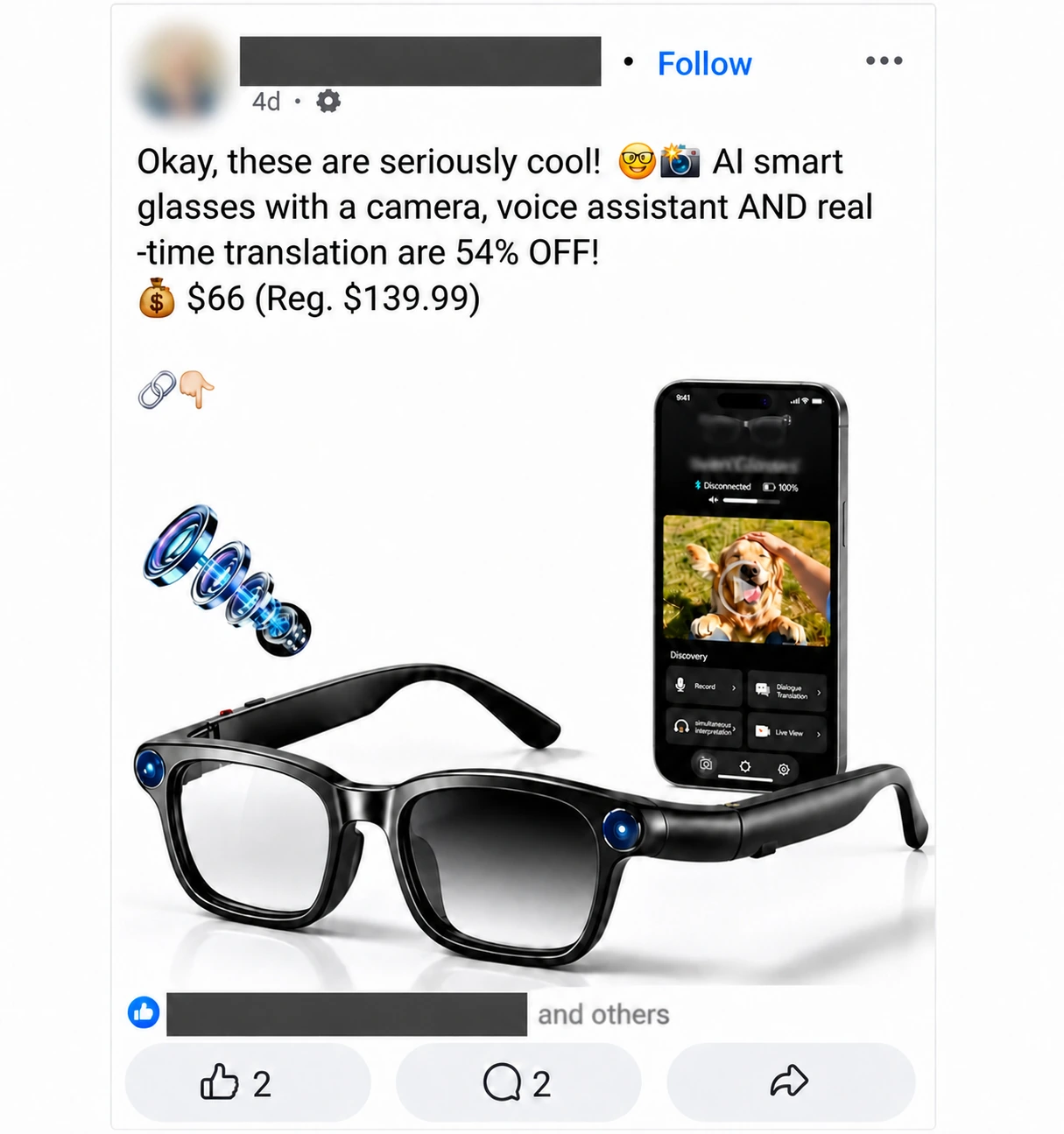
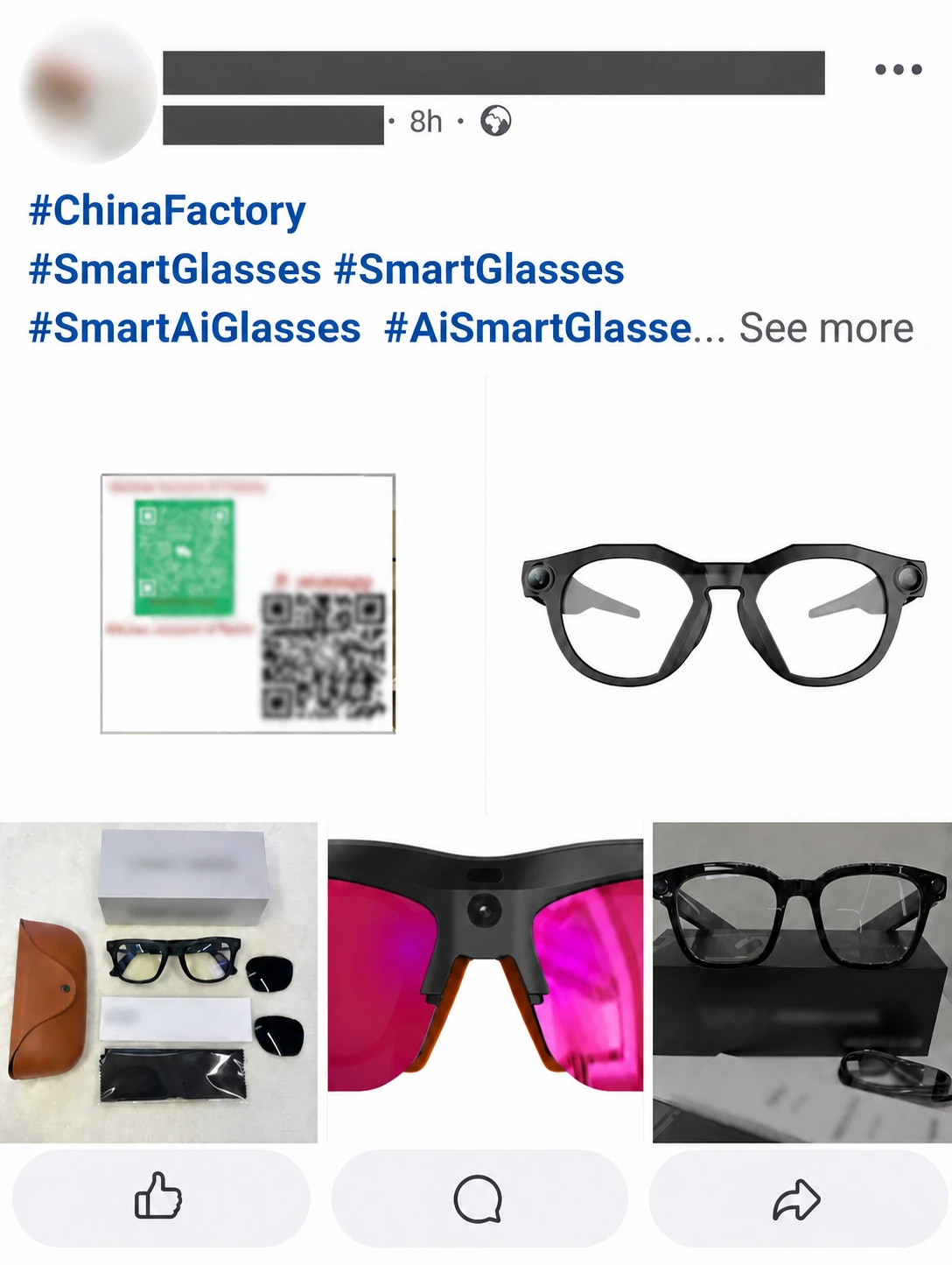
It was inevitable that cheap AI glasses would begin filling social-media feeds. Once products such as Ray-Ban Meta showed that ordinary buyers were interested, lesser-known manufacturers and retailers had every reason to offer their own versions at much lower prices.
Camera glasses, translation glasses and supposed AI assistants are now appearing for £50 or £60, often accompanied by a feature list that sounds remarkably similar to products costing several times more. Some may be perfectly decent, but others could be generic hardware wearing a new name and carrying an ambitious advert. It is difficult to tell the difference from a Facebook post alone.
First of all, establish whether the advert is even real. Some use pictures of products from established manufacturers, so if the glasses shown are Ray-Ban Meta but the price is only a fraction of their usual cost, there is a strong chance you are in scam territory rather than looking at a genuine bargain.
The feature list only tells you so much
Budget smart glasses can look convincing because the advertising concentrates on the obvious attractions: a camera, translation, voice control, recording and Bluetooth audio. Those features are easy to fit into a short post, especially when they sit beside a large discount and a product image that resembles a more familiar pair.
The danger is assuming a cheap, unbranded product will perform the same as a premium pair, just because the features on the advert are the same.
An advert may tell you that two pairs can translate a conversation, for example, but it says nothing about recognition accuracy, delay, supported languages or whether the companion app is pleasant to use. Two cameras can share the same quoted resolution while producing very different photographs. Voice control can mean a polished assistant or a small set of commands that work only when conditions are favourable.
There are less glamorous questions as well. Who made the glasses and developed the app? Is the software updated regularly? What happens after the next Android or iOS release? Is there a meaningful warranty, and can the seller realistically be contacted if something goes wrong? Those details rarely fit into the advert, but they are a large part of the product the buyer will actually live with.
The app is part of the product
Most AI glasses depend heavily on a companion app, so apparently capable hardware can become far less useful when the software is unreliable, badly maintained or withdrawn. Before buying an unfamiliar pair, find the app-store listing and check who publishes it, when it was last updated and what owners are saying about recent versions rather than the launch release.
Permissions deserve the same attention. Camera-enabled glasses may interact with the phone’s microphone, photographs, videos, location or other personal information, depending on how the system works. The Information Commissioner’s Office advises buyers of smart products to check what information a device and its app collect, how long security updates will be provided and whether requested permissions appear reasonable.
There is no need to assume that every unfamiliar app is doing something improper. A buyer should, however, be able to identify the developer and understand why sensitive access is being requested. If that information is missing or impossible to follow, the low price begins to look less attractive.
Privacy should not be vague
A well-known brand is not automatically trustworthy, but an established manufacturer is normally easier to scrutinise. There is usually a published privacy policy, support material, account controls and some explanation of what happens to recordings, transcripts or requests sent to an AI service.
That information can be much harder to find when an unknown product is sold through a social-media post. A vague, badly translated or absent privacy policy should count against the glasses, particularly when the product contains an outward-facing camera and microphones.
Recording indicators matter too. If the glasses include a camera, the wearer and people nearby should be able to tell when recording is taking place, with clear instructions explaining how the indicator works. A tiny light is not a complete privacy system, but an unexplained or easily obscured indicator is a poor place to start.
Hardware quality matters when it sits on your face
Smart glasses are rechargeable electronics worn against the head for hours at a time, so hinges, battery cells, charging hardware and heat management deserve more attention than they receive in most adverts. A frame can also become unpleasant very quickly when its weight is poorly distributed or the fit cannot be adjusted.
UK product-safety guidance warns that an item bought from a seller based outside the country may not always have been manufactured or labelled in accordance with UK requirements. Buyers are advised to look at who and where they are purchasing from, then check the instructions, manufacturer details and relevant safety markings.
Plenty of inexpensive imported products will be safe and perfectly usable. The price itself is not evidence of a problem, but nor should it stop somebody checking who made the glasses and who accepts responsibility for them.
Aftercare is part of the price
The largest difference between an established brand and an unknown one may not become visible until something stops working. Companies such as Meta and Even Realities have support teams, firmware updates, warranty procedures and reputations to protect. Customer service will not always be brilliant, but there is at least an identifiable company behind the product.
Generic smart glasses are sometimes sold under several names by different retailers, even when the underlying hardware is substantially the same. A listing can disappear, the seller can move on to another product and the app can stop being maintained. At that point, a physically functional pair of glasses may lose the service or software that made it smart.
It is worth checking the warranty before ordering rather than after a fault develops. Look for a proper business address, a returns process that makes sense from the UK and evidence that replacement parts or charging accessories can actually be obtained.
Reviews need checking too
Independent reviews are especially useful when the manufacturer is unfamiliar, although a row of enthusiastic comments underneath the advert is not the same thing. Look for coverage that shows the app, sample photographs, translation in use and the less exciting parts of ownership rather than simply repeating the specification sheet.
Be cautious when every comment is glowing, vague or written in remarkably similar language. The Competition and Markets Authority recommends reading the detail behind ratings and looking across a range of scores, since polished or repetitive reviews may not reflect a real customer’s experience.
What to check before buying
- The manufacturer and seller: can both be identified, and is there a genuine UK contact or returns route?
- The companion app: who publishes it, when was it last updated and do recent reviews describe it working reliably?
- The advertised features: are translation languages, camera performance and AI functions demonstrated rather than merely listed?
- Privacy and permissions: is there a readable policy explaining what the camera, microphones and app collect?
- Recording indicators: is it obvious when the camera is active?
- Safety and charging: are the manufacturer, instructions and relevant conformity markings present?
- Warranty and updates: is there a credible promise of aftercare, security fixes and replacement accessories?
Cheap does not automatically mean bad
There is nothing wrong with budget AI glasses as a category. Lower prices make the technology available to more people and force established brands to explain why their hardware costs several times as much. A good budget pair could be exactly what moves smart eyewear beyond enthusiasts.
The sensible approach is to judge an unfamiliar product on more than its headline promises. Make sure the advertised features work in the UK and support the languages or phone the buyer actually uses, then consider the software, privacy information, warranty and independent evidence alongside the price.
A £60 pair may turn out to be surprisingly good. It may also arrive with weak support, inconsistent software or privacy documentation that reveals very little. The advert cannot settle that question on its own.
Confidence has to be earned
AIWearHQ will not dismiss a pair of glasses simply because the brand is new or the price is low. Cheaper newcomers deserve a fair hearing, and some will undoubtedly develop into serious competitors.
Until there is reliable information about how a product performs, what its app does and who stands behind it, we would be cautious about recommending it. Premium glasses are not automatically better, but their higher price often pays for the parts that never make the social-media advert: sustained software development, support, accountability and a product that has been tested beyond its feature list.