Research-led Review
RingConn Gen 3 review: excellent battery with no subscription
RingConn Gen 3 is comfortable, lasts for days longer than most rivals and puts its full health app behind the purchase price rather than a membership. Its new features are useful, although less dramatic than some of the marketing suggests.
How this review was put together: AIWearHQ hasn’t personally worn or tested RingConn Gen 3. This research-led review combines RingConn’s current specifications and UK buying information with hands-on reports from TechRadar, The Gadgeteer and TechCrunch. We compared their experience of comfort, battery life, sleep tracking, alerts and the app, and paid particular attention to the health claims that need context.
At a glance
- Best for
- Sleep and recovery tracking without an ongoing membership
- Not ideal for
- Serious workout tracking or direct blood-pressure readings
- Price checked
- $426 direct when viewed from the UK; regional prices vary
- Subscription
- No mandatory monthly fee for the standard app features
- Official battery
- 10–12 days with vibration; 11–14 days without
- Sizes
- 6–15; Gen 3 needs its own sizing kit
The short version
RingConn Gen 3 is one of the easiest smart rings to recommend if you don’t want a subscription. It is light enough for overnight wear, provides a broad set of health and sleep trends, and has outstanding battery life with a genuinely useful charging case.
Our view: this is RingConn’s best ring, though Gen 2 owners can afford to be selective about upgrading.
What it does well
- Comfortable for day and night wear
- Excellent battery life
- No monthly membership
- Universal charging case included
What holds it back
- App lacks Oura’s polish
- Workout detection still needs attention
- New alerts have narrow uses
- Direct UK buying terms need care
RingConn built its reputation by doing two practical things well: making a ring people could sleep in and keeping the useful data free after purchase. Gen 3 sticks to that approach, then adds vibration alerts, vascular trends and a charging case that no longer depends on ring size.
None of those additions transforms what a smart ring is. Gen 3 still works quietly in the background, recording sleep, heart rate, temperature changes, stress and movement for the app to explain later. The hardware has no screen, and its new vibration motor isn’t trying to turn a finger into a notification centre.
The result is a capable, low-maintenance health tracker with a few rough edges. Its battery and subscription-free ownership are excellent. The software is useful but not as polished as Oura’s, while activity tracking remains more basic than the sleep experience. RingConn’s more ambitious health tools also need careful language: vascular trends aren’t blood-pressure readings, and sleep-apnoea insights aren’t a diagnosis.
What RingConn Gen 3 actually does
Gen 3 uses an optical heart-rate sensor, temperature sensor and accelerometer to track heart rate, HRV, blood-oxygen variation, breathing rate, skin-temperature changes, stress, sleep and activity. RingConn adds a vibration motor in this generation, giving the ring a way to nudge its owner without a screen.
The app works with iPhone and Android, with support for Apple Health and Google Health Connect. There is no mandatory subscription for RingConn’s standard health and wellness features. Once the ring is paid for, its normal sleep, recovery and trend information remains available.
The comparison with Oura is fairly simple. Oura still has the more mature app and a stronger reputation for turning data into clear advice. RingConn asks for more money upfront in the UK view we checked, but it doesn’t add £5.99 every month to keep the useful detail visible.
Gen 3 is at its best when it behaves like a quiet health record, not a tiny smartwatch.
Comfort is still one of RingConn’s best qualities
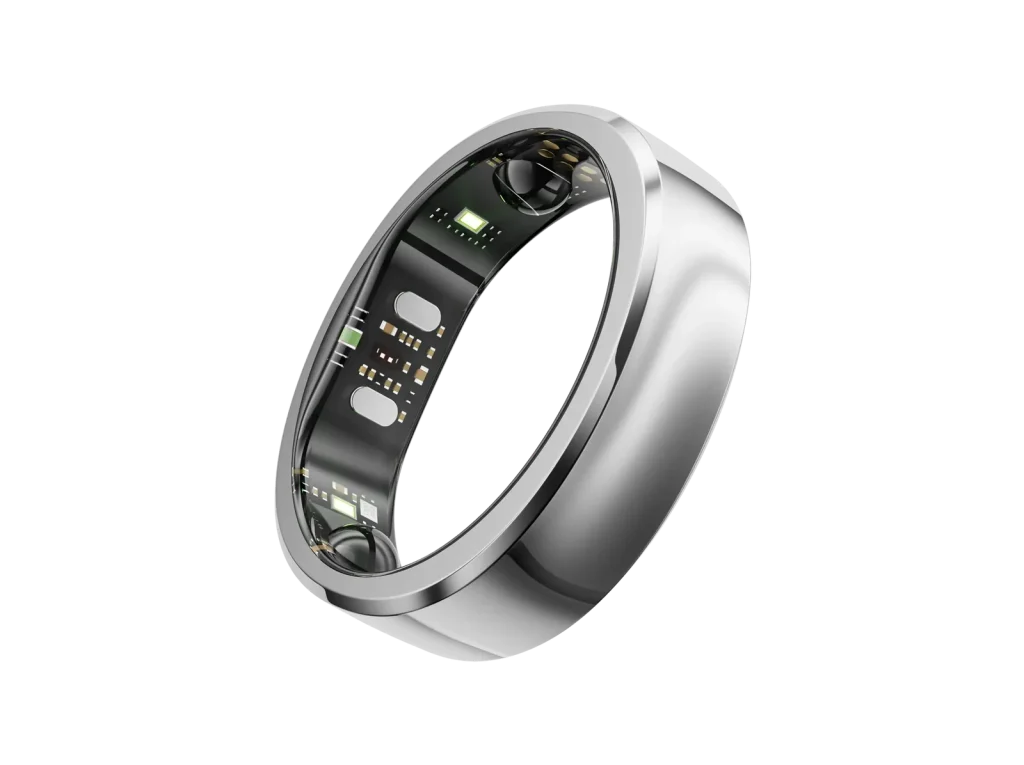
The titanium ring is 2.3mm thick and weighs between 2.5g and 3.5g depending on size. It is slightly thicker and heavier than Gen 2, though still light for a smart ring. Its softened square shape is distinctive without looking out of place as jewellery.
Comfort was consistent across the hands-on reports. TechRadar’s reviewer wore it day and night for two weeks without a problem, while The Gadgeteer’s Vincent Nguyen measured a size 10 at 2.7g and kept it on through sleep, showers and ordinary daily work. The sensors create a raised section on the inside, but the overall ring remains discreet enough to forget for long stretches.
There are five finishes: Future Silver, Royal Gold, Matte Black, Brushed Silver and Brushed Rose Gold. A short test of the glossy silver version found no visible scratches after more than a week, which is encouraging rather than conclusive. Rings meet harder surfaces all day, and darker coatings tend to make damage easier to see. Removing it for weight training and manual work is sensible.
Gen 3 runs from size 6 to 15, one size further than Gen 2. It also has a new sizing system. An old RingConn size, an Oura size or an ordinary jewellery measurement should not be treated as a safe shortcut; use the dedicated Gen 3 kit and wear a sample for a full day and night.

The vibration motor is useful, but deliberately limited
Gen 3 can vibrate for supported health changes, sedentary reminders and a low battery. The alerts are subtle and configurable, and they give the ring a direct way to ask for attention when the phone is out of sight.
It cannot mirror general phone notifications, vibrate for messages and calls, or act as a normal alarm. That may disappoint anyone imagining a silent wake-up ring. It also keeps the product focused. A constant stream of buzzing would undermine the appeal of wearing something quieter than a watch.
The early experience isn’t flawless. One owner said the ring did not always vibrate when expected, and another Gen 2 owner found little day-to-day benefit beyond standing reminders. The hardware opens useful possibilities, but the current implementation is a modest convenience rather than the reason to upgrade by itself.
Sleep remains the strongest part of the experience
RingConn records sleep duration, estimated stages, timing, heart rate, HRV, blood oxygen, breathing and temperature trends. Independent testing found that it captured the shape of a week convincingly, including short nights, a long recovery sleep and naps that the reviewer had forgotten.
The value sits in the pattern. A single sleep score can oversimplify a complicated night, whereas several weeks can show whether late meals, alcohol, illness, travel or inconsistent bedtimes repeatedly move the same signals. The absence of a screen helps here. Gen 3 can gather that record without lighting a wrist beside the bed.
RingConn’s app is easier to navigate than earlier versions according to one recent reviewer, though it still lacks Oura’s editorial control. Some insights feel generic, and a score can arrive without enough explanation of what changed or what to do next. Another owner found the information engaging and specific. The difference suggests an app with plenty of useful material that doesn’t always establish a clear order.
Sleep-apnoea insights can prompt a conversation, not settle one
Gen 3 analyses overnight breathing and oxygen-related patterns, then provides sleep-apnoea risk information. Nguyen’s hands-on test produced two normal nights followed by a result labelled “Suspected Mild”. The reviewer arranged a formal sleep study, while later ring readings returned to normal.
The sequence captures both the promise and the limit. A consumer wearable can notice an unusual night and encourage someone to seek proper advice. It cannot establish whether the result reflects a persistent condition, a temporary event or an imperfect estimate.
Screening is not diagnosis
RingConn Gen 3 is not a medical device. Persistent snoring, gasping, morning headaches or serious daytime tiredness should be discussed with a clinician, even when the app looks reassuring.
Vascular insights are not cuff-free blood pressure
Vascular Health Insights are the other feature most likely to be misunderstood. RingConn combines overnight vascular-load patterns with lifestyle information and optional readings entered from a blood-pressure cuff. It uses those inputs to build a longer-term view.
The ring does not provide systolic and diastolic measurements. It cannot replace a validated cuff, and a vascular trend should not be used to change medication or make a diagnosis. Even the setup relies on conventional cuff information if the owner wants blood-pressure context.
There may be value in seeing how overnight patterns move alongside sleep, stress and activity. Early reviews found the language and purpose less intuitive than the headline suggests. Buy Gen 3 for its established sleep and recovery work; treat vascular insights as an additional view that still needs time and clearer explanation.

Activity tracking remains secondary
Gen 3 counts steps, estimates calories and records supported workouts, but it is not a strong sports watch replacement. One owner found that gym sessions and Pilates needed manual intervention while very short walks could be identified as workouts. That is the wrong balance for someone who trains regularly and wants a clean exercise diary.
Optical heart-rate tracking on a finger also has familiar problems when grip and movement become intense. The ring is useful for placing daily movement and post-exercise recovery beside sleep. A watch or chest strap remains the better tool for live pace, intervals and heart-rate-led training.
RingConn also promotes headache-related signs and other predictive wellness features. TechCrunch’s Amanda Silberling reported that the app failed to warn during a severe migraine after they had hoped the feature would justify the purchase. One review cannot settle the feature’s value, but it is a good reason not to buy the ring for one speculative alert.
Battery life is the everyday advantage
RingConn claims 10–12 days with vibration enabled and 11–14 days with it switched off. Hands-on results have been closer to the lower end: one seven-day test was pacing towards roughly ten days. That still puts Gen 3 among the strongest smart rings for endurance.
The universal wireless case is included and can charge any RingConn generation or size. It removes the size-specific limitation of the Gen 2 case and is useful in a household with more than one ring. RingConn quotes about 90 minutes for the ring and two hours for the case.
Long battery life is especially valuable in a sleep tracker. Fewer charging gaps produce a more continuous record, and the portable case makes a short top-up easy while showering or getting ready. As the battery ages, endurance will fall, and the 14-day figure should be read as the best official scenario rather than an everyday guarantee.
Should Gen 2 owners upgrade?
Most Gen 2 owners do not need to hurry. The older ring is thinner and lighter, already has strong sleep tracking, lasts up to 12 days and includes a charging case. It also avoids a subscription.
Gen 3 earns an upgrade when one of its particular changes solves a real problem: size 15, the universal case, supported vibration reminders or vascular trends. The slightly longer battery ceiling and refreshed sensors are welcome, but they do not make a comfortable, healthy Gen 2 obsolete.
New buyers have an easier choice. Gen 3 is the better long-term purchase when the price gap is manageable. Gen 2 remains appealing on a substantial discount, especially for someone mainly interested in sleep who has no use for haptics or vascular information.
UK buyers should check the final terms
RingConn’s product page showed $426 for Future Silver when viewed from the UK on 15 August 2026. The company’s comparison table also advertises a lower US starting price and warns that regional prices vary. Check the currency, finish, optional Care+ cover and final total rather than converting the most attractive number in an advert.
RingConn says UK orders over $20 ship free and are normally fulfilled from Hong Kong. The sizing kit is sent before the ring when the buyer does not already know their Gen 3 size, adding another stage to delivery.
The direct-return policy is restrictive. RingConn says it does not support a general no-reason return or exchange; a request within 14 calendar days needs a valid reason under its published conditions. Sizing kits are non-returnable consumables, and cancelling after one has shipped attracts a $10 charge. The company states a one-year warranty outside the EEA, which includes the UK.
Before ordering
Use the Gen 3 sizing kit, confirm the final UK price and stock, and read RingConn’s current return terms. Do not assume the direct store provides a conventional try-it-and-change-your-mind window.
Who should buy RingConn Gen 3?
It suits you if…
- You want sleep and recovery tracking without a monthly fee.
- You value long battery life and an included travel case.
- You prefer a light, screen-free wearable at night.
- Subtle health and standing reminders sound useful.
- You use iPhone or Android and are happy to explore health trends.
Look elsewhere if…
- You want direct blood-pressure readings or medical diagnosis.
- Exercise detection and live sports data come first.
- You need messages, calls or a silent alarm on the ring.
- You want the most polished and guided health app.
- An easy UK change-of-mind return is important.
AIWearHQ verdict
RingConn Gen 3 is a very good smart ring with an unusually easy ownership model. It is comfortable, lasts well over a week in realistic use and includes a universal charging case. The full standard app remains available without a membership.
The newer features need sensible expectations. Vibration alerts have a narrow job, vascular insights are not blood-pressure readings, and the activity experience still trails the sleep tracking. The app contains useful information, though it does not explain every score as clearly as Oura.
Recommended: Gen 3 is one of the strongest choices for a buyer who wants detailed sleep and recovery trends without another subscription. Existing Gen 2 owners should upgrade for a specific feature, not from fear that their current ring has suddenly fallen behind.
Buying options
AIWearHQ Recommended Retailers
RingConn’s own store was the verified route when checked on 15 August 2026. It showed $426 for Future Silver to a UK visitor. Regional pricing, finishes, sizes and delivery can change.
RingConn official store
The full Gen 3 range, dedicated sizing process and direct RingConn support. Review the current returns policy before the sizing kit ships.
Compare the current range
Gen 2 may still be good value on a large discount. Compare the exact features and final regional price before choosing a generation.
AIWearHQ may earn a commission from qualifying purchases when affiliate tracking is added. This doesn’t affect our editorial view. Always confirm the exact model, size, finish, final price, delivery terms and returns policy before ordering.
RingConn Gen 3 questions
Does RingConn Gen 3 need a subscription?
No. RingConn provides its standard health, sleep and wellness features without a mandatory monthly membership.
How long does the RingConn Gen 3 battery last?
RingConn claims 10–12 days with vibration enabled and 11–14 days without it. Independent use has landed nearer the lower end, which is still excellent for a smart ring.
Does RingConn Gen 3 measure blood pressure?
No. Vascular Health Insights show longer-term trends and can use manually entered cuff readings, but the ring does not provide direct systolic and diastolic measurements.
Can RingConn Gen 3 diagnose sleep apnoea?
No. It can identify overnight patterns and risk indicators that may justify a conversation with a clinician. It is not a medical device and cannot provide a diagnosis.
Can RingConn Gen 3 vibrate for alarms and messages?
No. The vibration motor is currently used for supported health changes, sedentary reminders and low-battery alerts, not general phone notifications or ordinary alarms.
Is RingConn Gen 3 waterproof?
RingConn rates it IP68 and 10ATM, with a stated depth of 100 metres. That covers normal water exposure and swimming under the company’s guidance, but it does not protect the finish from scratches.
Is RingConn Gen 3 worth upgrading to from Gen 2?
Only when you want a specific addition such as vibration reminders, vascular trends, size 15 or the universal charging case. Gen 2 remains a strong sleep ring with excellent battery life and no subscription.
Does RingConn Gen 3 use the same sizing as Gen 2?
No. Gen 3 has a different sizing system, so use the dedicated kit and wear a sample for a full day and night before confirming the order.