Research-led Review
Samsung Galaxy Ring review: a strong choice for Samsung Health users
Comfortable and discreet, Samsung’s first smart ring gets the everyday basics right. Its core health features currently require no paid Samsung Health membership, and it’s strongest for sleep and general wellbeing.
How this review was put together: AIWearHQ hasn’t personally worn or tested the Samsung Galaxy Ring. This research-led review combines current Samsung UK documentation with hands-on testing from six independent publications and selected owner feedback. Product details, compatibility and UK buying links were rechecked in July 2026.
At a glance
- Best for
- Samsung and Android users who want passive sleep and wellbeing tracking
- Not ideal for
- iPhone owners or anyone wanting detailed live workout data
- Official battery
- Up to six days in sizes 5–11; up to seven days in sizes 12–15
- Membership
- No paid Samsung Health subscription required
- Sizes
- 5 to 15; use Samsung’s sizing kit before ordering
- Water resistance
- 10 ATM and IP68; not suitable for diving or high-pressure water
The short version
The Galaxy Ring is a well-made, low-maintenance health tracker. It’s comfortable enough for sleep, presents its data clearly in Samsung Health and currently provides its core features without a paid membership.
Our view: it’s one of the easiest smart rings to recommend to a Galaxy phone owner. Other Android users get the important health features too, although a few useful extras remain Samsung-only.
What it does well
- Light and comfortable for overnight wear
- No paid membership currently required for core features
- Clear Samsung Health integration
- Useful portable charging case
What holds it back
- Some features need a Galaxy phone
- Limited workout tracking
- The finish can pick up marks
- Long-term battery reports deserve attention
The Galaxy Ring is designed to work in the background. Put it on, let it collect data and open Samsung Health when you want to see how you slept or whether your recent routine is helping. There’s no screen to check and no vibration on your finger.
That simplicity is also a useful way to understand its limits. This isn’t a tiny Galaxy Watch. It doesn’t have GPS, a display or detailed on-device workout feedback. It’s built for passive health tracking, with sleep, resting heart rate, activity and recovery doing most of the work.
Across the independent reviews examined, comfort and sleep tracking were the most consistent strengths. The same reviews were less enthusiastic about serious exercise tracking, and several recorded shorter battery life than Samsung’s best-case figure. It works best as an unobtrusive wellbeing tracker, with exercise treated as a supporting feature.
What the Samsung Galaxy Ring actually does
Inside the titanium band are an accelerometer, optical heart-rate sensors and a skin-temperature sensor. The ring tracks movement, steps, heart rate, heart-rate variability and sleep, then synchronises the results to the Samsung Health app. It can also contribute to cycle tracking, which Samsung says is powered by Natural Cycles.
Samsung brings those signals together in an Energy Score. This uses recent sleep, activity, sleeping heart rate and heart-rate variability to give a daily view of how prepared your body may be for the day. It’s a general wellness feature, not a medical assessment, but it gives the raw numbers a more approachable starting point.
Most of the product’s “AI” sits in Samsung Health, where the app interprets sensor data and produces Energy Score and related guidance. The ring doesn’t contain a conversational assistant, speaker or display.
The Galaxy Ring is most useful when you stop expecting it to behave like a watch. Its job is to collect the background detail and leave the interpretation to Samsung Health.
The ring can automatically detect walking and running, but workout support is modest compared with a sports watch. There’s no screen for pace or heart rate, and no built-in GPS. If training analysis is the main reason you want a wearable, a ring is better used alongside a watch than instead of one.
Design and comfort: light, discreet and size-sensitive
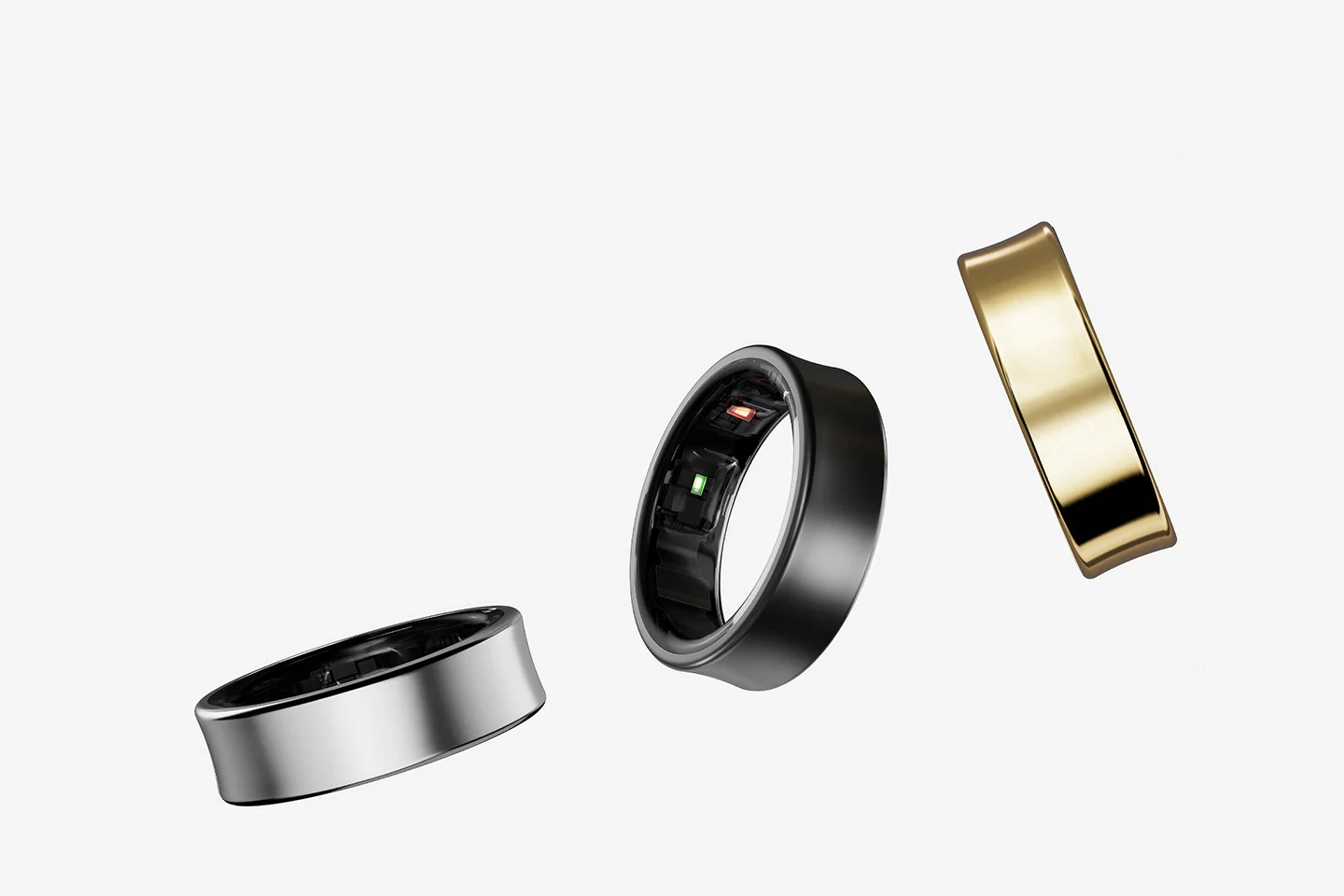
The Galaxy Ring is 7mm wide and 2.6mm thick. Depending on size, it weighs between 2.3g and 3.3g. Independent reviewers were unusually consistent about the result: it feels light, its concave outer shape keeps it reasonably discreet and it’s comfortable enough to wear overnight.
It’s still broader than ordinary jewellery, and correct sizing matters. Fingers swell with heat, exercise and sleep, so a ring that feels fine for ten minutes in a shop may become irritating overnight. Samsung offers sizes 5 to 15 and recommends its own sizing kit because Galaxy Ring sizes don’t map neatly onto every normal ring size.
Wear the sample for at least a full day and night before committing. Samsung says the orientation indicator should face the palm. It also warns that a tattoo or mole beneath the optical sensor can interfere with tracking, in which case another finger may work better.
The Grade 5 titanium body is offered in Black, Silver and Gold. It’s robust, but not immune to cosmetic damage. Reviewers reported scuffs, particularly on the black finish and during weight training. Removing any smart ring before handling barbells is sensible for the finish, your grip and your finger.
Sleep is where it makes the most sense
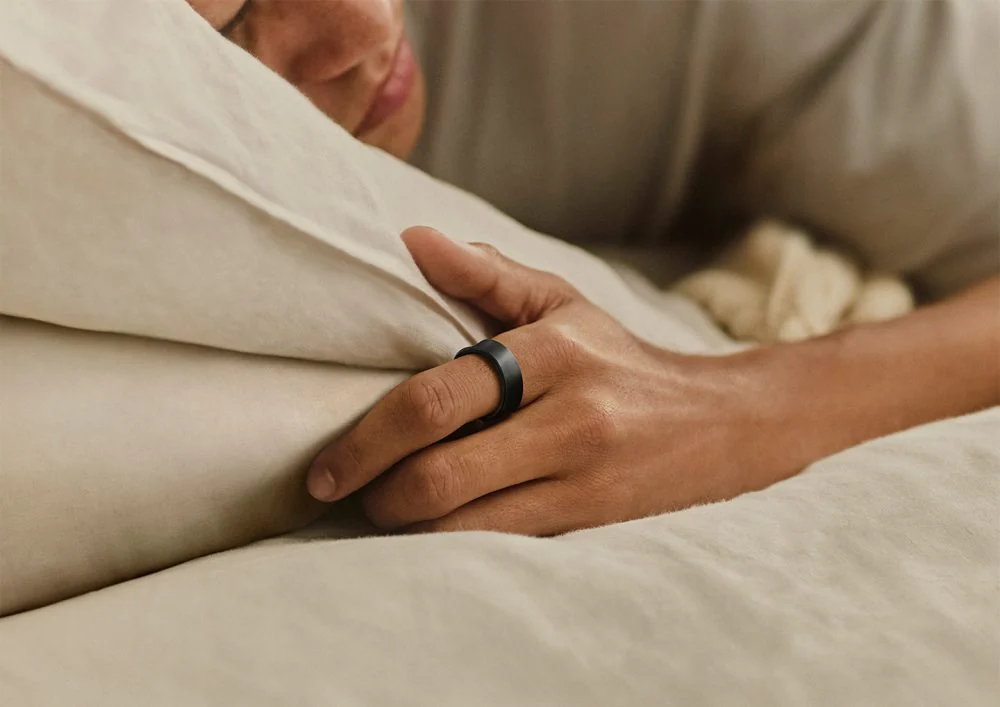
Sleeping in a watch isn’t difficult for everyone, but plenty of people dislike the weight, light and bulk. The Galaxy Ring avoids most of that. It records sleep stages, movement, sleeping heart rate, heart-rate variability and skin-temperature trends while remaining small enough to forget about for much of the night.
Samsung Health then presents a sleep score and coaching based on longer-term patterns. The independent reviews generally found sleep duration and overnight trends useful, although stage estimates and exact timings didn’t agree perfectly with other devices in every test. That’s normal territory for consumer sleep trackers: trends over several weeks are more meaningful than treating one night’s graph as a clinical result.
It’s worth keeping the boundary clear. Samsung describes the sleep features as intended for general wellness and fitness, not the detection or treatment of a sleep disorder. If the data repeatedly suggests something is wrong, the useful next step is a conversation with a medical professional rather than self-diagnosis from the app.
Samsung Health and the Energy Score
Because the ring has no display, Samsung Health is the product interface you actually use. It collects sleep, activity and heart-rate information in one place, explains the Energy Score and lets you examine the underlying measurements when you want more detail.
Samsung Health covers plenty of information, although it isn’t always as focused as a dedicated smart-ring app. Oura’s software is often better at establishing a personal baseline and explaining what has changed. Samsung’s advantage is different: if you already use Samsung Health, the ring’s data joins a familiar record rather than creating another health platform and another account to manage.
Samsung doesn’t currently require a paid Samsung Health membership for the ring’s core features. A £399 launch price was substantial, but the lack of an additional monthly fee keeps the continuing cost simpler while that policy remains unchanged.
Energy Score is useful as a summary, but it shouldn’t override how you actually feel. A low score may reflect poor sleep, hard exercise or an unusual resting heart rate. It can’t know about a difficult day at work, a looming deadline or how motivated you are.
It works with Android, but Galaxy owners get more
The Galaxy Ring requires Android 11 or later, at least 1.5GB of RAM, the Galaxy Wearable app, Samsung Health 6.27 or later, and a Samsung account. It doesn’t work with an iPhone.
Owners of other Android phones can still use the central health and sleep functions. Some extras, including Double Pinch gesture controls and Samsung’s Find My Ring feature, require a compatible Galaxy phone. Double Pinch can dismiss an alarm or control the phone camera on supported models, which is clever, but it isn’t a reason to buy the ring by itself.
A Galaxy Watch and Galaxy Ring can both feed information into Samsung Health. This doesn’t make a watch essential. In fact, one of the ring’s main attractions is getting overnight and background data without wearing a watch at all. The combination is most relevant to keen Samsung Health users who want a watch for exercise and a ring for sleep.
Battery life, charging and water resistance
Samsung’s current UK specification is more precise than the original launch claim. Sizes 5 to 11 are rated for up to six days, while sizes 12 to 15 are rated for up to seven. Independent reviewers commonly saw around four to six days, with ring size, features and usage all affecting the result.
The transparent charging case is genuinely useful. It protects the ring, shows charge progress with a ring of LEDs and carries its own battery, so it can provide convenient top-ups away from a socket. It supports USB-C and wireless charging.
Water resistance is rated at 10 ATM and IP68. Samsung says the ring isn’t suitable for diving or high-pressure water activities, and recommends rinsing it in fresh water after salt-water use. Water resistance can also diminish with wear and damage, so the rating shouldn’t be treated as permanent invulnerability.
What to know before buying
Use the sizing kit
Don’t guess from an ordinary ring or buy the only size left in a sale. Sensor contact and comfort both depend on fit. Samsung Direct offers a free sizing-kit route with purchase; check the exact sizing-kit terms if buying elsewhere.
It can scratch
Titanium is durable, but the polished edges and coloured finishes can show marks. Remove the ring for weight training, heavy manual work or any task where a rigid band could catch.
Workout tracking is secondary
Automatic walking and running detection is useful for a general activity record. It isn’t a replacement for a dedicated running watch, particularly if you want GPS routes, live pace, training load or reliable in-workout feedback.
Long-term battery reports shouldn’t be ignored
Two owner reviews examined on Samsung’s UK product pages described a sharp loss of battery capacity after six months or a little over a year. Two reports can’t tell us how widespread the problem is, and owner reviews aren’t controlled tests. They’re still worth noting before a substantial purchase. Keep proof of purchase, check the guarantee and returns terms, and remember that a manufacturer’s guarantee doesn’t replace UK statutory consumer rights.
Health data remains personal data
Samsung Health can hold intimate information about sleep, heart rate and cycle trends. Review its permissions, connected services and sharing settings rather than accepting every option by default. That’s sensible housekeeping for any health wearable.
Samsung Galaxy Ring or Oura?
Samsung has the lower continuing cost, while Oura offers more mature smart-ring software. Samsung Health covers the important daily information without charging a membership. Oura has historically done a better job of personal baselines, trend explanations and turning recovery data into a focused ring-first experience.
For an existing Galaxy owner, the Samsung ring is the more natural choice unless Oura’s deeper software specifically appeals. For an iPhone owner, the choice is simpler because the Galaxy Ring isn’t compatible. For serious training, neither ring fully replaces a good sports watch.
Our Oura Ring 4 review examines one of the best-known alternatives. A direct Samsung-versus-Oura comparison will follow once the current models and UK buying options have been checked side by side.
Who should buy the Samsung Galaxy Ring?
It suits you if…
- You use a Galaxy phone and Samsung Health already.
- You want sleep and wellbeing tracking without wearing a watch.
- You prefer a screen-free device that doesn’t demand attention.
- You want your ring data to sit inside Samsung Health.
- You’re happy to treat workout tracking as a secondary feature.
Look elsewhere if…
- You use an iPhone.
- You want live pace, GPS routes or detailed training guidance.
- You dislike broad rings or can’t find a secure, comfortable fit.
- You need medical-grade monitoring or diagnosis.
- You’re unwilling to accept the reported long-term battery uncertainty.
AIWearHQ verdict
The Galaxy Ring gets the most important part right: it’s easy to wear. That gives its sensors a fair chance to collect the overnight and background data people buy a smart ring for. Samsung Health is broad rather than beautifully focused, but it makes the results understandable and currently keeps the core features outside a paid membership.
It isn’t the strongest choice for exercise, and buyers outside Samsung’s ecosystem lose a few extras. The two owner reports of battery decline examined for this review are also worth knowing about, even though they don’t establish a widespread fault.
Recommended: the Samsung Galaxy Ring is a strong choice for Galaxy phone owners who want discreet sleep and wellbeing tracking. It remains a good option for other Android users too, provided the Samsung-only features aren’t central to the decision.
If you’re still deciding which approach suits you, our smart ring buying guide compares the main choices and the trade-offs that matter before you buy.
Buying options
AIWearHQ Recommended Retailers
Use the sizing kit before choosing a ring. The option below was rechecked on 26 July 2026 and leads to Samsung’s official UK buying tool.
Samsung UK
Samsung’s official UK buying route includes Black, Silver and Gold, sizes 5 to 15, and an option to order with a free sizing kit before confirming the size.
View Galaxy Ring at SamsungThis is currently a direct, untracked retailer link. Stock, prices and delivery terms can change after publication. Always confirm the size, finish, guarantee and returns terms before ordering.
Samsung Galaxy Ring questions
Does the Samsung Galaxy Ring require a subscription?
No paid membership is currently required for the Galaxy Ring’s core health, sleep and Energy Score features. Samsung could change its services or terms later.
Does the Galaxy Ring work with an iPhone?
No. It requires a compatible Android phone running Android 11 or later. A Samsung account and the Galaxy Wearable and Samsung Health apps are also required.
Do you need a Samsung phone?
No. The central health and sleep features work with other compatible Android phones. Double Pinch gestures and Find My Ring require a compatible Galaxy phone.
How long does the Galaxy Ring battery last?
Samsung rates sizes 5 to 11 for up to six days and sizes 12 to 15 for up to seven days. Independent review results commonly sat between four and six days, depending on size and use.
Can you swim with the Samsung Galaxy Ring?
Samsung rates it at 10 ATM and IP68, but says it isn’t suitable for diving or high-pressure water activities. Rinse it in fresh water after exposure to salt water.