AI Earbuds | Launch
Timekettle W4 Plus AI translator earbuds go on sale in the UK from £299
Timekettle’s translator earbuds cover conversations, calls and video, with AI summaries too. UK buyers can pay £379 for the full feature set or £299, with premium tools requiring a subscription after a seven-day trial.
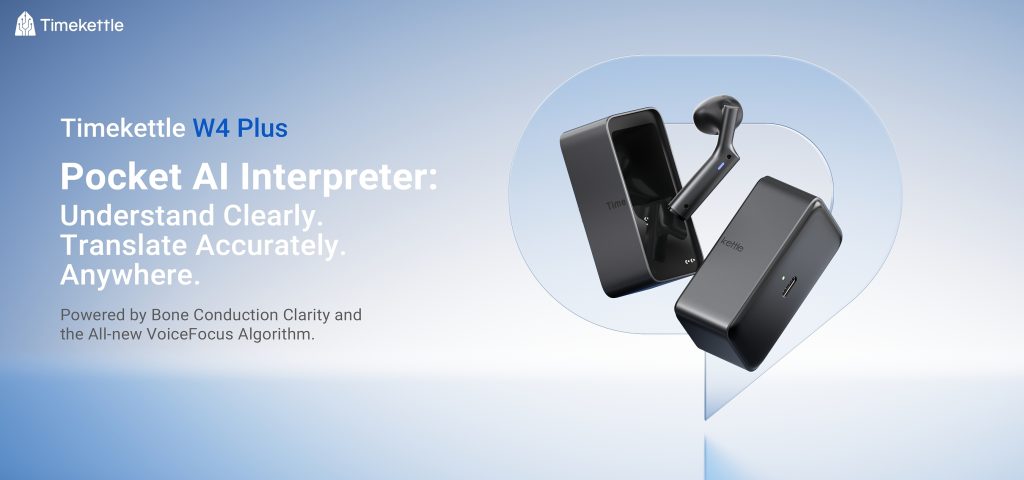
Timekettle’s W4 Plus AI Interpreter Earbuds are now available to order in the UK from £299, although buyers who want the full set of translation and AI tools without a monthly bill will need to spend £379. The cheaper version keeps its basic conversation features, but call translation, video translation and the advanced AI functions require a subscription after a seven-day trial.
Announced at IFA in Berlin on 4 September, the earbuds went on sale today, 6 September. Timekettle’s UK shop lists Space Black, Midnight Blue and Sandy Gold, with the £299 and £379 prices currently shown as £20 reductions. It advertises 30-day returns and a 12-month warranty. Delivery is less clear: the page showed an estimated arrival of 9–13 September when we checked, alongside general guidance of eight to 14 business days outside the US. We’d confirm that before ordering for a particular trip.
£80 extra removes the premium subscription
On the £299 Subscription version, Two-Person Conversation and On-Site Listening remain free and unlimited, so someone buying mainly to talk face-to-face may never need to pay anything more. Call Translation, Audio & Video Translation and the advanced AI tools are included in the seven-day trial, then move behind the Unlimited Plan. Timekettle says the £379 One-time Purchase version permanently unlocks all those features with no recurring fee.
The company’s FAQ quotes $14.99 a month for the plan, with app-store prices adjusted by region and taxes. There still isn’t a fixed sterling monthly price on the UK product page, so we haven’t converted the US figure and presented it as a UK charge. If you start the trial, Timekettle says it renews automatically unless cancelled; its advice is to cancel through Apple or Google at least 24 hours before it ends.
That makes the extra £80 worth considering if translated calls or meeting summaries are the reason you’re buying. Paying less upfront could suit occasional use, while a regular subscription would gradually eat into the saving. Our AI earbuds buying guide covers these ongoing costs alongside the usual questions about comfort and phone compatibility. We haven’t tested W4 Plus, though, so neither price is a recommendation from us yet.
Translation comes first, including calls and video
Timekettle builds these earbuds around interpreting conversations. In Two-Person Conversation mode, each person wears one earbud to hear the translated exchange. On-Site Listening, also described as Listen & Play, is intended for talks, tours and similar situations, with replies played through the phone’s speaker. The two premium modes extend translation to phone calls and services such as Zoom, WhatsApp and Microsoft Teams, or to audio and video playing on the connected phone. Timekettle says the other person on a translated call doesn’t need its app or earbuds.
The advertised online coverage is 52 languages and 106 accents, with 13 language pairs available to download for offline use. Those downloads support face-to-face conversation and Listen & Play, not the whole feature set: calls, multimedia translation and the advanced AI tools still need an internet connection. As we explain in our guide to where the AI in earbuds actually runs, the phone, app and cloud services can do a substantial part of the work.
The new AI tools include industry-specific translation profiles for subjects such as manufacturing and biotech, Conversation Memory to maintain context during an exchange, and Live Summary for notes afterwards. Conversation Memory only applies to the current session, according to Timekettle; it doesn’t carry that context into the next conversation.
Battery life and accuracy need a proper test
W4 Plus combine dual microphones, a bone-conduction voiceprint sensor and Timekettle’s VoiceFocus system to pick out speech. The company claims a 32–47% improvement in low-volume voice pickup over the original W4, while its product page gives a 90% accuracy figure attributed to its own AI lab. Neither tells us how well a long conversation will translate when people interrupt each other, use unfamiliar accents or speak over background noise.
We’d want to try those situations, along with call delay and app reliability, before drawing conclusions. Battery life needs similar care: Timekettle rates the earbuds for a little over three hours of continuous translation at 50% volume, or up to 12 hours with recharging from the case. Music playback is rated at six hours per charge and 18 hours including the case. Returning them to the case between holiday conversations may be easy enough, but a long conference session would need more planning.
Saved conversations need a clearer privacy explanation
Timekettle’s product page says conversations aren’t stored, used for training or shared, and describes the service as compliant with GDPR and FERPA. Those are company assurances, not findings from an independent audit. Its launch announcement also describes saved audio, transcripts and summaries, without clearly separating user-saved files from temporary processing data.
There’s more detail in the app privacy policy linked from Google Play, although the version we reached is in Chinese and predates this launch. It describes sending voice and text from certain AI interaction tools through Timekettle’s servers to third-party AI services, with consent and restrictions on those providers using the data for training. It also contains broader provisions for using anonymised data to improve models. That isn’t enough to establish how every W4 Plus feature handles UK users’ conversations, and we wouldn’t assume all modes follow the same process.
Saved files could be kept separately from temporary cloud processing, so their existence alone doesn’t establish a contradiction. But if you’re considering these for confidential meetings, the public documentation still leaves practical questions about where recordings and transcripts live, how long they remain there and who processes them. We’d want clear answers before using them for sensitive business discussions.