AI Glasses | Privacy
Dutch regulator urges camera-glasses bans in hospitals and courts
The advice also covers places of worship. The Dutch watchdog warns that AI can process information about people nearby even when the glasses aren’t saving a photo or video.
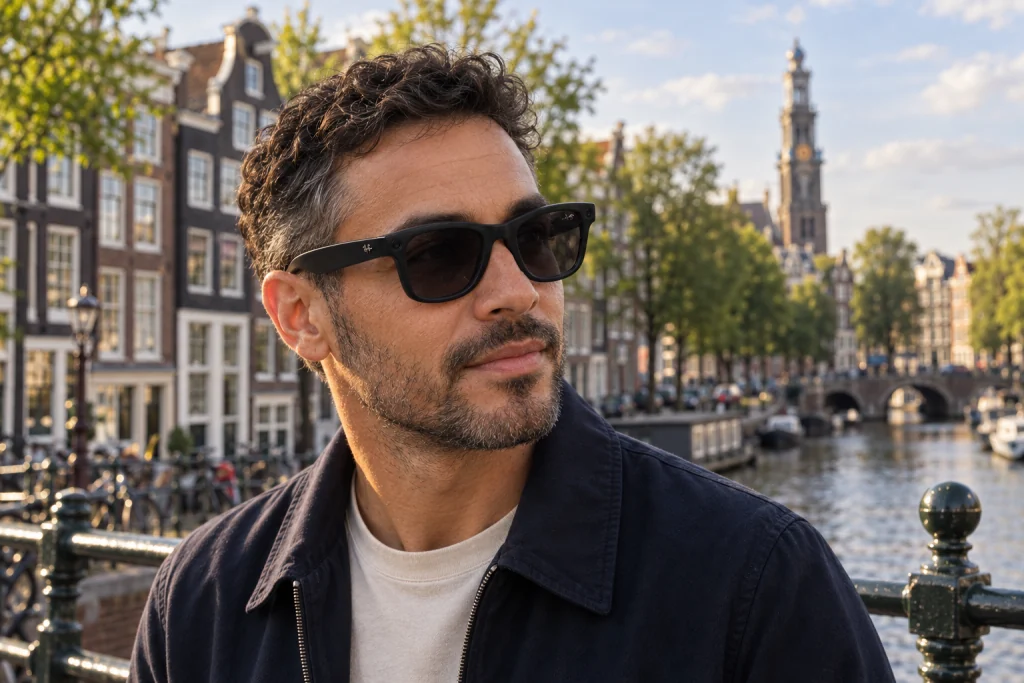
Hospitals, courts and places of worship should ban camera glasses through their house rules, the Netherlands’ privacy regulator has advised.
The Autoriteit Persoonsgegevens (AP) published its warning on 22 September. It recommends prohibiting both wearing and using the glasses in sensitive settings, and says it’s looking into possible further measures. This is advice to venue operators; the announcement doesn’t introduce a national ban.
Alongside filming, the AP raises a less obvious concern: glasses can process personal information through their AI features even when no photograph or video is saved.
The camera can be working without saving a video
Imagine asking your glasses to read a sign in a hospital waiting room. You’re interested in the words on the wall, but there may also be patients in view. Having nothing new in your photo gallery wouldn’t, by itself, tell you what the AI service had received or processed. That’s an example of the distinction the regulator is drawing, rather than a claim about how any particular model handles that scene.
The AP wants people nearby to be able to tell when a camera or AI feature is active.
We’ve already covered Meta’s work to prevent people defeating its recording light. There’s good reason to keep improving those safeguards. But someone nearby may never have owned smart glasses, let alone learnt what each light means. They shouldn’t need to know the product as well as its owner to understand whether a camera is being used.
The Dutch guidance follows Hamburg’s investigation into Ray-Ban Meta privacy. Its recommendations concern camera glasses generally, rather than only Meta’s products.
The UK regulator brings another perspective
The Dutch advice doesn’t change UK law. Here, the Information Commissioner’s Office has recently discussed why privacy safeguards need to work for people who cannot see them.
In a blog published on 17 September, ICO chief executive Paul Arnold describes being severely visually impaired and the help smart glasses can offer him and others. He also condemns harmful uses and the stigma they create for responsible wearers.
CCTV signs, a raised phone and other visible warnings already leave blind and low-vision people at a disadvantage. Making a light brighter might help some bystanders, but it won’t make the warning accessible to everyone. Arnold calls for safeguards that allow people to understand and exercise control over the use of their information.
That leaves a hospital with a difficult decision. A patient may reasonably object to a camera in the waiting room, while another person may use those glasses to read the signs or call for visual assistance. Our recent report on Parliament’s smart-glasses review explores much the same difficulty: protecting confidential information while allowing for assistive use.
What should owners take from this?
Before using a camera or visual AI in a sensitive place, check the venue’s rules. If you rely on your glasses for assistance, explaining that in advance gives staff a chance to discuss what can be accommodated. A camera used to help its wearer still needs careful handling around other people’s information.
There are separate questions about sharing footage. The AP’s guidance on photographs and video distinguishes strictly private use from wider publication, which requires a lawful basis under the GDPR. The ICO likewise says a public online post is unlikely to count as purely personal use. Neither position amounts to an unrestricted right to publish whatever the glasses capture.
A call for transparency
We’d like manufacturers to explain visual AI as clearly as they explain taking a photograph: what is captured, where it goes and what people nearby can notice. Owners need that information too, especially when someone asks them to stop filming and they weren’t aware the camera was doing anything that might concern them.