Meta Adventurer review
Meta Adventurer Review: Ray-Ban Features Without the Ray-Ban Price?
Meta Adventurer keep the 12MP camera, open-ear audio and AI features of the latest Ray-Ban Meta glasses, but start at £269. The Ray-Ban badge has gone; most of the useful technology hasn’t.
How this review was put together: AIWearHQ hasn’t completed a hands-on test of Meta Adventurer. We checked Meta’s current UK product information and support material, then compared five independent reviews and hands-on reports, with additional coverage and owner discussions used to challenge the main findings. Any personal-use observations in our Ray-Ban Meta Gen 2 review apply to that product, not these glasses.
Meta Adventurer arrive with a slightly awkward problem for Ray-Ban Meta Gen 2: they appear to do most of the same things at a lower starting price.
The camera is still 12MP. Video still reaches 3K. The speakers sit above the ears, Meta AI is built in and the charging case still handles several days away from a plug. What changes is the frame. The Ray-Ban logo is replaced by Meta’s own branding, the finish is less luxurious and the fit is more adjustable.
That puts Adventurer in an interesting position. They aren’t the new flagship, but they could be the point where camera glasses stop feeling like a premium experiment and become a more ordinary buying decision.
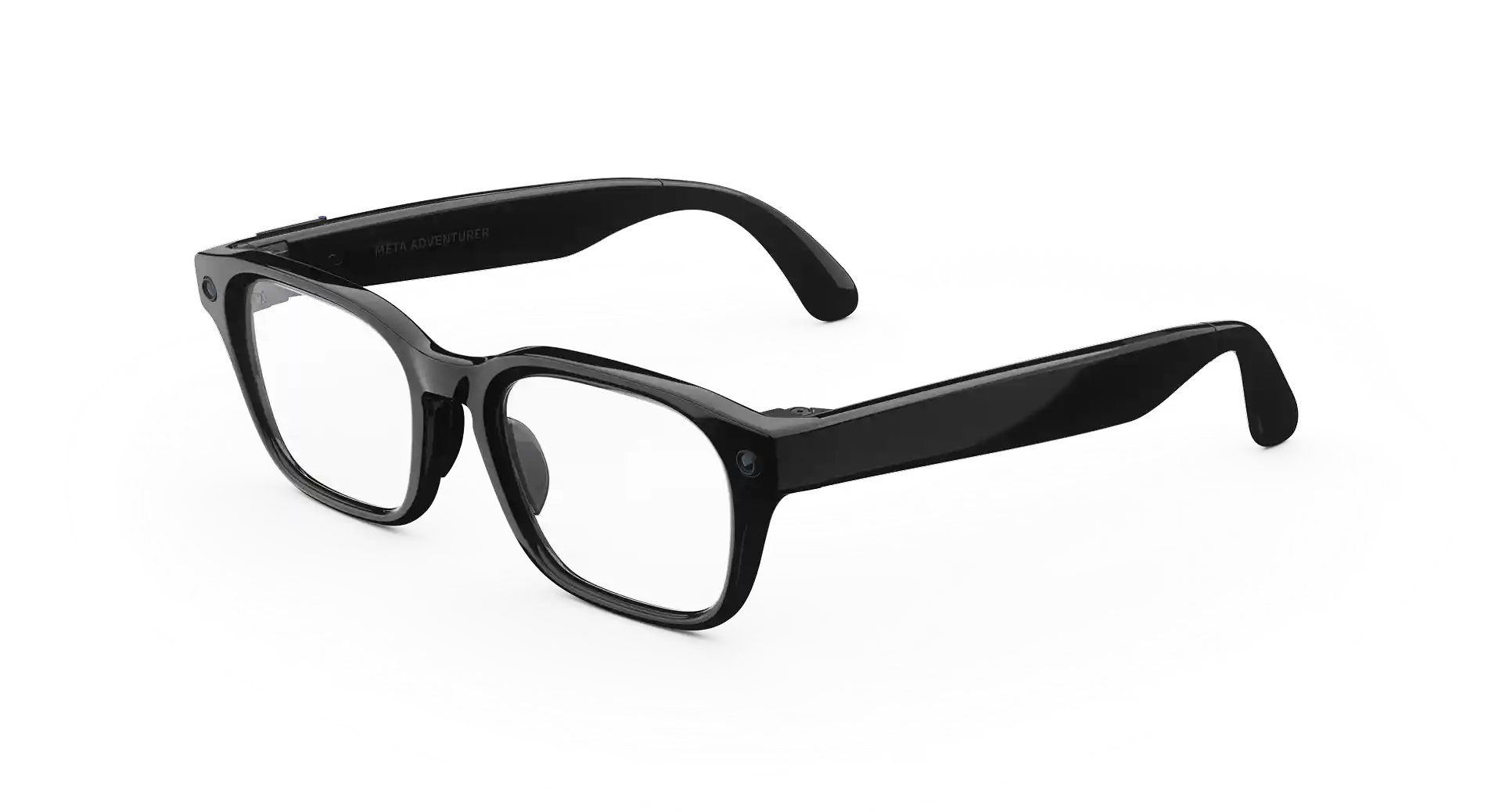
What are Meta Adventurer?
Meta Adventurer are camera-and-audio glasses with no display in the lenses. They can take photos and video, play music, make calls, read messages, answer questions and use Meta AI to respond to what the camera can see. The result is much closer to a pair of headphones and a hands-free camera than augmented reality.
The frame has a classic rectangular shape, available in Standard and Large sizes. Meta also offers adjustable nose pads, temple tips and overextension hinges, which give buyers more ways to improve the fit than the fixed plastic bridge on many Ray-Ban styles.
Prescription lenses are supported, although the available range isn’t unlimited. Anyone with a stronger or more complex prescription should check the current options with Meta or their optician rather than assuming that every lens can be fitted.
At £269, the missing logo starts to look sensible
The official UK starting price is £269. Ray-Ban Meta Gen 2 currently starts higher, and the gap grows once premium lenses and finishes enter the picture.
The lower price doesn’t buy cut-down camera hardware. Across the independent reports we checked, the pattern was consistent: everyday camera, audio and AI performance felt very close to the latest Ray-Ban models. The camera, microphones, speakers and official battery figures are also closely aligned.
The differences are more obvious when you look at them. Adventurer don’t have the same brand recognition or polished feel, and some finishes can look more gadget-like than a familiar Wayfarer. If the Ray-Ban shape is the reason you want smart glasses, the cheaper price won’t settle the decision. If the technology is the reason, it may do.
| Buying point | Meta Adventurer | Ray-Ban Meta Gen 2 |
|---|---|---|
| Official UK starting price checked | £269 | Higher-priced premium range |
| Camera | 12MP, up to 3K video | 12MP, up to 3K video |
| Fit | Adjustable nose pads and temple tips; Standard and Large | Frame-dependent fixed fit and multiple branded styles |
| Finish | Functional, with Meta branding | More recognisable and generally more premium |
| Best reason to buy | Core features at the lower price | Ray-Ban styling, finish and frame choice |
More adjustable, although not automatically more comfortable
Adventurer are among the lighter-looking frames in Meta’s own range, but they are still heavier than ordinary glasses. Meta’s published specifications put the Standard frame at 53.8g and Large at 54.8g before prescription differences.
The adjustable nose pads are a genuine advantage. They can change how high the frame sits and help keep the camera level, while the flexible temple tips offer another route to a better hold. That matters because a slightly poor fit affects more than comfort: it can tilt photos, move the speakers away from the ears and make the glasses slide during a walk.
Fit remains personal. Some owner feedback mentioned sliding despite the extra adjustment. Standard and Large are useful choices, but they aren’t a substitute for trying the frames if you can.

The camera remains the strongest reason to wear them
Meta lists a 12MP camera with a wide 100-degree field of view and video at up to 3K and 30fps. They won’t replace a good phone camera when you have time to compose a shot, but that misses the point. The appeal is capturing something while your hands are occupied or before the moment has passed.
Our month with Ray-Ban Meta Gen 2 showed both sides of that idea. A head-level camera is wonderfully immediate, but you can’t see the frame before pressing the button. Photos can arrive tilted or include more sky, pavement or nearby furniture than intended. Adventurer use very similar camera hardware, so buyers should expect the same learning curve rather than assuming every first-person image will be perfectly composed.
Dynamic capture can switch orientation to suit how a photo is likely to be viewed, while the customisable action button gives the wearer a quicker route to a chosen feature. Those touches make the camera easier to use, but they don’t turn the glasses into a phone screen you can preview.
Open-ear audio is useful precisely because it stays out of the way
The speakers sit in the temples and direct sound towards the ears. Independent testing found them well suited to podcasts, calls, directions and background music without sealing the wearer off from traffic or conversation.
They aren’t private in the way earbuds are. People nearby may hear audio at higher volume, and noisy roads or trains will expose the limits of open-ear speakers. Independent tests also found that wind reduction helps calls but can’t remove every gust.
The attraction is convenience. Music can continue while the wearer remains aware of what’s happening around them, and there’s nothing extra to place in an ear or remember to charge.
Meta AI is improving, but software access still needs checking
Meta AI can answer questions, identify objects, read text, translate and respond to what the camera sees. Meta’s newer Muse Spark model is intended to make those exchanges faster and more conversational, and independent demonstrations found object recognition and translation impressively responsive.
Software availability is less tidy than the hardware. Meta rolls features out by country, language and account, so a feature shown in a US demonstration shouldn’t automatically be treated as guaranteed on every UK pair.
That doesn’t make the AI unimportant. It means buyers should judge the glasses on the features available now and treat future additions as a bonus. Meta’s track record suggests the software will keep changing; it doesn’t promise that every change will reach every user at the same time.
Battery life is good enough for a day, until you use everything at once
Meta claims more than eight hours of typical use, with the foldable charging case adding up to 40 extra hours. For light photography, notifications and occasional audio, that should cover a normal day.
Heavy use changes the answer. One independent reviewer recorded roughly four and a half hours while playing music almost continuously, and frequent 3K recording will also drain the battery much faster than occasional photos. The eight-hour figure is a guide to mixed use, not a promise under the hardest workload.
The case is more portable than the familiar Ray-Ban case because it folds flatter when empty. That’s a small improvement, but useful if the glasses are going into a work bag or cabin luggage every day.
The privacy light is part of wearing a camera in public
A white indicator shows when the camera is taking a photo or recording. If the light is covered, the camera is designed to stop working. Meta has also strengthened its response to physical tampering with the indicator.
Some owners see that as an unwanted restriction on a product they bought. We think it is the part that makes camera glasses easier for everyone else to accept. People already ask whether smart glasses are recording them; a clear, enforced signal gives the wearer a straightforward answer.
Our separate feature looks at the debate around Meta’s recording light in more detail. Adventurer don’t remove that debate, but their lower price could put the camera in front of more people, which makes the safeguard more important rather than less.
Six checks before you place an order
- There is no display. Information is heard through the speakers or handled in the phone app; nothing appears in the lenses.
- The official eight-hour battery claim depends on use. Music, calls, AI and 3K video can reduce it substantially.
- Prescription support has limits. Check the current supported range before ordering.
- AI features can vary. Availability may depend on country, language, account and software rollout.
- The capture light is enforced. Covering it disables the camera.
- The fit is adjustable, not universal. Standard and Large frames still need to suit the wearer’s face.
Who should buy Meta Adventurer?
Adventurer make the most sense for buyers who want Meta’s camera, audio and AI features but aren’t especially attached to the Ray-Ban name. They are also worth considering if adjustable nose pads and temple tips offer a better route to a secure fit.
They are less convincing for someone who sees their glasses as a fashion purchase first. Ray-Ban still offers more familiar shapes, a stronger eyewear identity and a finish that may feel worth paying for. Display seekers should look elsewhere too: Even Realities, Xreal and other products solve a different problem.
If you liked the idea of Ray-Ban Meta Gen 2 but the price stopped you, Adventurer remove much of that objection without losing the features that made the category useful.
Verdict: the sensible way into Meta’s AI glasses
Meta Adventurer aren’t better-looking Ray-Bans and they aren’t trying to be. They put a capable camera, useful open-ear audio and an AI assistant into a less expensive frame.
The finish is less premium, fit will still vary and Meta’s software rollouts remain frustratingly difficult to describe with certainty. Heavy audio or camera use also makes the official battery figure optimistic.
Those reservations don’t undo the value. At £269, Adventurer bring the strongest parts of Meta’s established glasses platform into a much more competitive price bracket. Buyers who care most about the technology should start here; buyers who care just as much about the frame and badge still have a reason to choose Ray-Ban.
AIWearHQ Recommended Retailers
Meta currently sells Adventurer directly in the UK, with the live product page showing current frame size, colour, lens and prescription choices.
Meta official store
Buy directly to see Meta’s current frame, lens and prescription options.
Official UK starting price checked on 15th August 2026: £269. Prices, colours, prescription options and availability can change, so confirm the current details before ordering. This is not currently an affiliate link.
Meta Adventurer questions
Do Meta Adventurer have a display?
No. They use a camera, open-ear speakers, microphones and Meta AI, but they don’t place text or images in the lenses.
How much do Meta Adventurer cost in the UK?
The official UK starting price was £269 when checked on 15th August 2026. Lens choices, prescription options and later price changes can alter the total.
Are Meta Adventurer the same as Ray-Ban Meta Gen 2?
They use closely matched camera, audio, AI and battery hardware, but the frames, fit system, branding, finish and available prescription choices differ.
Can Meta Adventurer use prescription lenses?
Yes, prescription options are available. The supported range isn’t unlimited, so stronger or complex prescriptions should be checked before ordering.
How long does the Meta Adventurer battery last?
Meta claims more than eight hours of typical use and up to 40 additional hours from the case. Continuous music, calls, AI and frequent 3K recording can shorten that considerably.