Oakley Meta Vanguard review
Oakley Meta Vanguard Review: Smart Glasses Built for Sport
Oakley and Meta have made a convincing pair of connected sports glasses. The question is whether the camera, audio and fitness links earn their place in your training.
How this review was put together: AIWearHQ hasn’t completed a hands-on test of Oakley Meta Vanguard. We checked Oakley and Meta product information, support material and current UK availability, then compared the findings of six independent professional reviews. Manufacturer claims and real-world observations are kept separate below.
Most smart glasses are everyday glasses with technology added. Oakley Meta Vanguard starts somewhere else. They’re wraparound sports sunglasses first, with the camera, speakers and controls built around running, riding and training outdoors.
That distinction matters. The Vanguard glasses aren’t trying to disappear in a meeting, and they aren’t a tiny screen for maps or messages. They’re designed to stay put when you’re moving, capture a first-person view without occupying your hands and keep music, calls or training information within earshot.
The result looks much more purposeful than the average pair of camera glasses. They’re also much more specialised. At £499, that purpose needs to match something you already do regularly.
What are the Oakley Meta Vanguard?
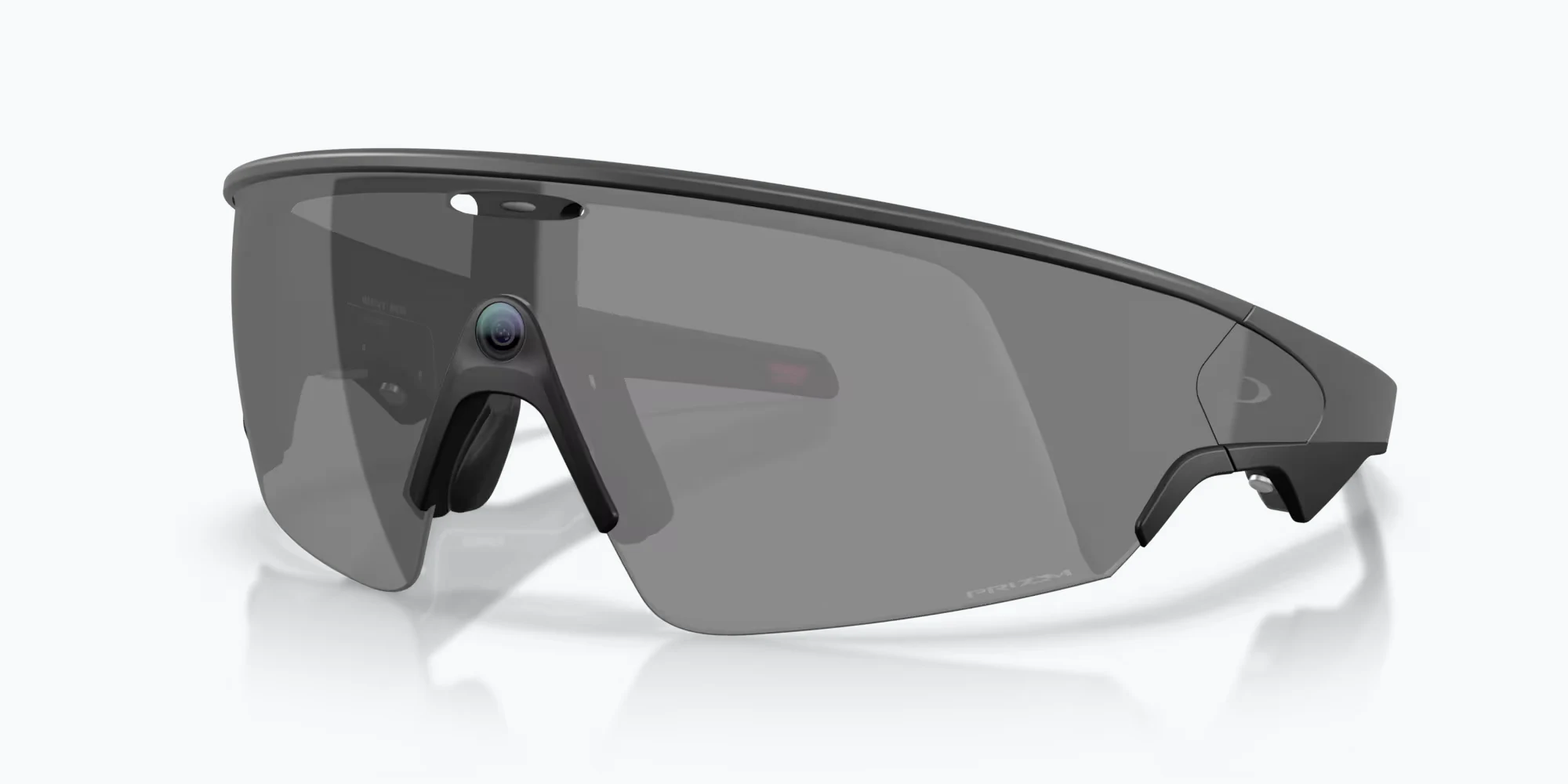
The Vanguard glasses are the sport-focused option in the Oakley Meta range. They combine Oakley’s wraparound Prizm lens and three-point fit with a centred 12MP camera, open-ear speakers, microphones, Meta AI and connections to Garmin and Strava.
There’s no display in the lens. You won’t see a map, a floating pace number or a video preview. Most information arrives through the speakers, while a small status light inside the frame can give simple performance cues when connected to a compatible Garmin device.
That makes Vanguard closer to three existing products combined: sports sunglasses, open-ear headphones and a simple wearable camera. Meta AI adds voice control and contextual assistance, but it isn’t the only reason the glasses make sense.
Design and fit
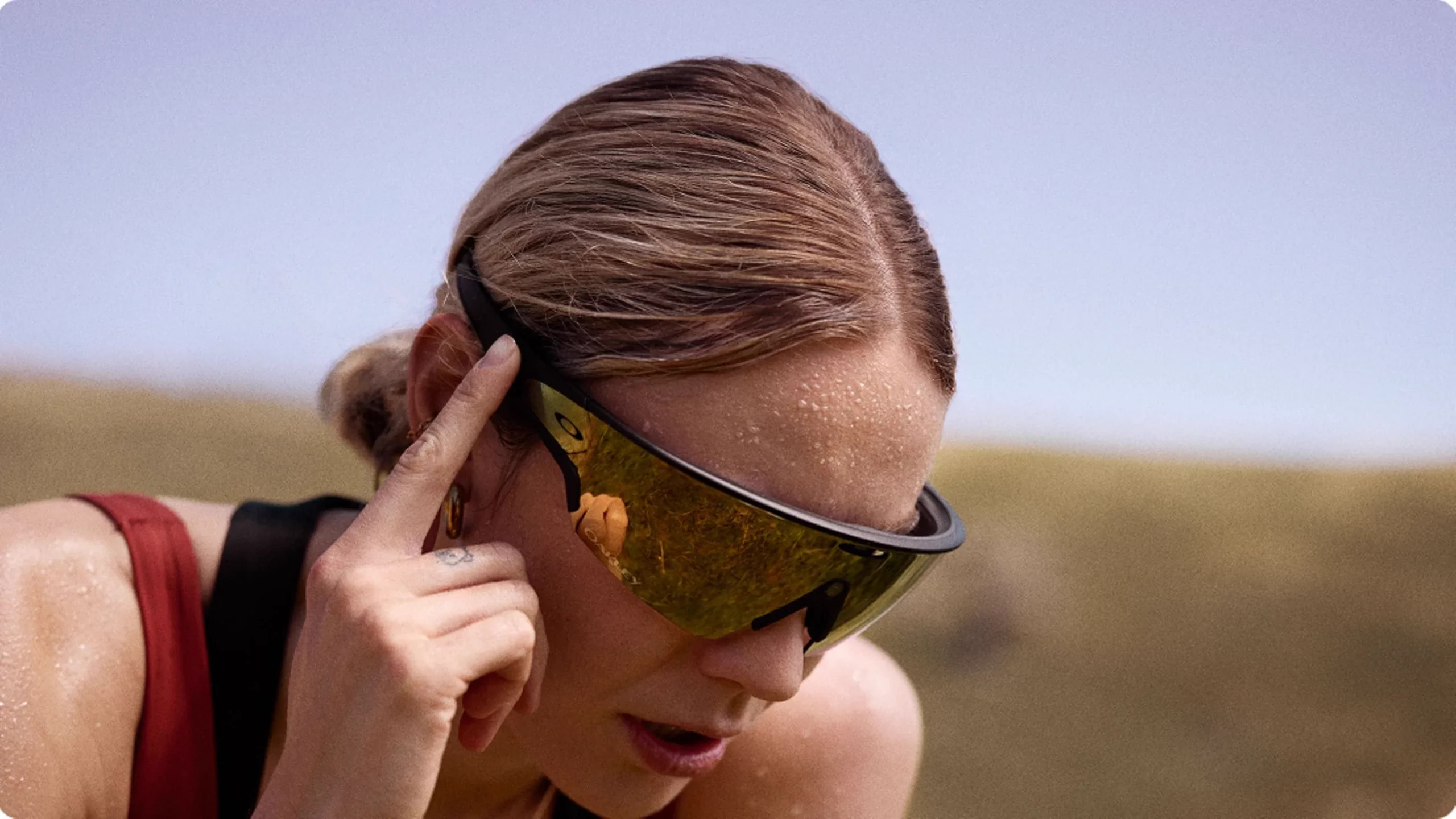
The wraparound shape will be familiar to anyone who already wears Oakley sports glasses. It provides more wind and light coverage than conventional frames, while grippy temple tips and interchangeable nose pads are intended to keep the glasses stable when the wearer is sweating or moving quickly.
Independent reviewers were broadly positive about that fit. Several found the weight well balanced and secure enough for running, cycling and skiing. It’s encouraging that the technology doesn’t appear to have spoiled the basic job of being sports eyewear.
Helmet compatibility deserves a proper check rather than an assumption. The arms are thicker than those on normal Oakleys because they contain speakers, microphones and electronics. One cycling reviewer found the fit excellent with one helmet and slightly skewed with another. If you ride, trying the glasses with your own helmet is more useful than studying another measurement table.
The other obvious point is style. The Vanguard glasses look right on a trail, bike or running route. They look much less natural at a desk. That isn’t a design failure; it’s the cost of giving the product a clear identity.
Camera and hands-free capture
The centred ultra-wide 12MP camera is one of Vanguard’s best decisions. Ray-Ban Meta glasses place their camera towards one side of the frame, which can make footage feel slightly offset. Putting the Vanguard camera between the eyes gives recordings a more natural first-person perspective.
Oakley quotes up to 3K video, and independent reviewers generally found the results more than good enough for social clips, short memories and a quick record of a ride or run. The real benefit isn’t beating a phone camera on detail. It’s getting the shot without stopping, taking a hand from the bars or finding somewhere safe to hold a phone.
There are limits. Adjustable stabilisation works at Full HD rather than the highest 3K setting, and recording remains built around short clips rather than long-form action footage. A dedicated action camera still offers more control, flexible mounting, wider recording options and better endurance.
The Vanguard glasses therefore make most sense for moments that would otherwise go uncaptured. They’re less convincing as a replacement for equipment you already use deliberately.
Audio, calls and voice control
Open-ear speakers let the wearer listen without blocking the ear canal. Reviewers repeatedly praised their volume and clarity, including in wind, and the microphones also appear to handle calls and voice commands well in difficult outdoor conditions.
This is useful for spoken directions, podcasts, music, calls and quick Meta AI responses. It also avoids adding a separate pair of earbuds to a helmet or running kit.
Open-ear doesn’t mean inaudible to everyone else or automatically safe. Sound can leak at higher volumes, and riders still need to hear traffic and judge when voice interaction is a distraction. The glasses can reduce the need to touch a phone, but they don’t remove the need for attention.
Garmin and Strava integration
Garmin and Strava are what separate Vanguard most clearly from lifestyle smart glasses. With a compatible Garmin device connected, wearers can ask for metrics such as heart rate or pace, receive simple target alerts and use workout events to trigger short captures. Garmin or Strava data can also be placed over photos and video afterwards.
The important detail is that the glasses aren’t measuring heart rate or running dynamics themselves. They’re retrieving information from the connected device or service and making it easier to hear, capture or share.
How useful that feels will vary. Some reviewers liked getting information without looking at a wrist or bike computer. Others found glancing at a watch quicker than asking a question and waiting for a spoken answer. Both reactions are reasonable.
The context may prove more useful than the live coaching. A short clip with the pace, distance or heart rate attached tells a better story of a hard section than an isolated camera recording. For athletes who already share training on Strava, that could be genuinely enjoyable rather than another dashboard to maintain.
Meta AI and the app
The Meta AI app is required for setup, settings, media transfer and connected services, and a Meta account is part of the deal. Buyers who are uncomfortable linking fitness, camera and voice features through Meta should consider that before purchase, rather than after opening the box.
Voice control can take photographs, start video, play audio, send messages and answer questions about what the camera can see. Fitness features expand that with connected training information. As with other Meta glasses, availability can vary by country, language, phone and software update.
Meta AI is most useful when it saves you from stopping to reach for your phone, whether that’s taking a photo, starting a recording or checking something by voice. It’s less persuasive when treated as a coach that understands an entire training history. Garmin and Strava still hold the deeper activity record; Vanguard mainly gives that information a convenient route to your ears and footage.
Battery life and charging
Oakley claims up to nine hours of typical use or six hours of continuous audio, with another 36 hours available from the charging case. A full charge is quoted at 75 minutes.
Independent testing makes the usual battery caveat particularly important here. Camera use, streaming audio, calls and frequent AI requests can reduce endurance substantially. One reviewer saw around six hours of mixed use, while another cycling test was much less satisfied. The official number is possible under Oakley’s test conditions; it shouldn’t be treated as nine hours of continuous filming.
For a normal run, ride or gym session, that’s unlikely to be a problem. All-day events, touring and frequent video capture require more planning. The case adds useful capacity but is bulkier than an ordinary glasses case, and the Vanguard can’t be charged without it.
Things worth knowing before buying
- There’s no display. Navigation, messages and training information are heard rather than shown.
- The best features depend on your existing kit. Garmin integration requires a compatible Garmin device sold separately.
- Video convenience beats video versatility. The centred camera is excellent for quick point-of-view clips, not a complete action-camera replacement.
- Fit is personal. Check the glasses with your own helmet and preferred nose pad.
- Recording is visible. A front-facing privacy light illuminates during capture, but wearers still need to use the camera considerately.
- The Meta AI app and account are required. Privacy and connected-account trade-offs are part of the product.
Who are they for?
The Oakley Meta Vanguard glasses are best suited to runners, cyclists, skiers and outdoor athletes who already wear performance sunglasses and regularly listen to audio or capture short clips. Garmin and Strava users have the clearest route to getting more than camera glasses from them.
They’re also appealing to creators who want first-person footage without carrying or mounting another camera. The quality is suited to quick social content, and the central viewpoint makes those clips feel more natural.
They make less sense for a buyer who mainly wants everyday AI glasses, discreet office frames, a visual display or long action-camera recordings. Ray-Ban Meta glasses are easier to wear through an ordinary day, while a dedicated sports watch or action camera remains better at its particular job.
Verdict
Oakley Meta Vanguard succeeds because Oakley and Meta haven’t simply put a different logo on familiar smart glasses. The secure wraparound fit, centred camera, louder audio and fitness connections all support the way the product is meant to be used.
They’re expensive and specialised, and the nine-hour battery claim needs sensible expectations once recording begins. Garmin and Strava integration will also feel more important to some athletes than others.
Those limits will rule the Vanguard out for some buyers, but they don’t spoil them for the athletes they were made for. Vanguard brings together good sports eyewear, useful open-ear audio and effortless point-of-view capture better than any general-purpose frame could. They’re a strong choice for active buyers who know exactly why they want them.
AIWearHQ Recommended Retailers
Oakley currently sells Meta Vanguard directly in the UK, with lens and colour options shown on the official product page.
Oakley UK
Buy directly from Oakley for current configurations, replacement lens information and manufacturer support.
Official UK price checked on 28 July 2026: £499. Prices and availability can change. This isn’t currently an affiliate link.