Even Realities G2 review
Even Realities G2 review: smart glasses without the camera
Even G2 puts a discreet green display in both lenses and leaves cameras and speakers behind. Its focused hardware, growing software platform and optional R1 ring make it an unusually considered alternative to camera-led smart glasses, although the phone remains an important part of the experience.
How this review was put together: AIWearHQ hasn’t completed a hands-on test of Even G2. We checked Even Realities’ current product pages, UK store, support material, privacy terms and developer documentation. Independent coverage was used only for reported experience, with product details verified against first-party sources. Read more about how AIWearHQ reviews wearable technology.
Even Realities made a sensible decision with its first smart glasses: rather than compete with camera-led products or try to become a screen for films, G1 concentrated on putting useful text in front of the wearer. The frames looked fairly ordinary, the display was private and there was no camera or speaker to explain to anybody nearby.
G2 keeps that idea and improves the parts that were most obviously holding it back. The display is larger and faster, the optics are slimmer, the controls are easier to reach and the software now has a route beyond Even Realities’ own features through Even Hub.
It is still a particular kind of product, and at £599 before prescription lenses it is easiest to justify when one or two features will become part of the buyer’s regular routine. Directions, translated speech, presentation notes and short updates all make a convincing case for having information at eye level.
What are the Even G2 glasses?
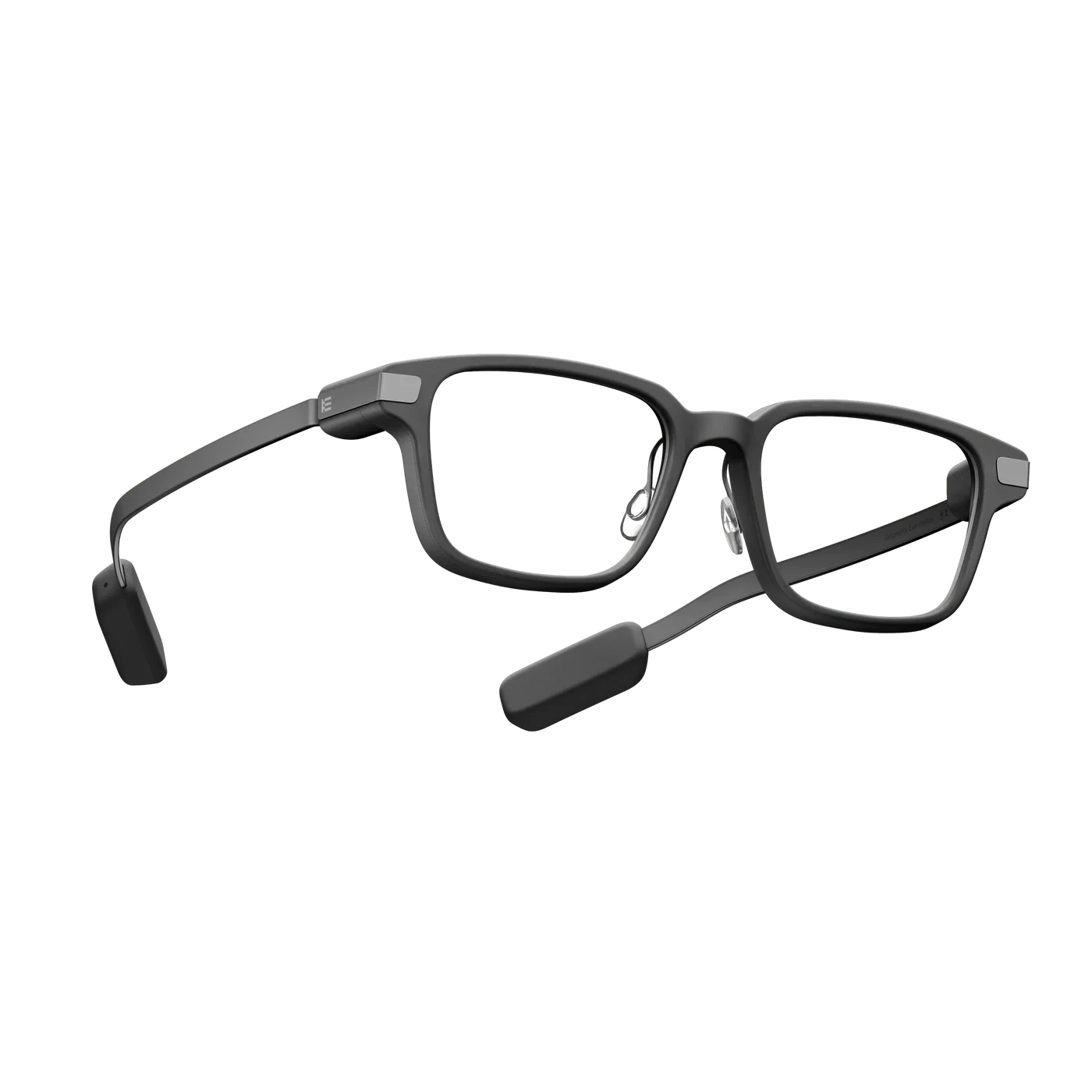
Even G2 are display glasses built around short pieces of information. A green micro-LED image appears in both lenses and can show notifications, walking or cycling directions, notes, translations, a teleprompter and responses from Even AI.
There is no camera and no speaker. The glasses cannot photograph what the wearer sees, play music or handle calls through the frame. Their image stays fixed in view rather than placing digital objects around the room, so this is best described as a heads-up display rather than full augmented reality.
The narrow remit is also the attraction. The glasses do not look as conspicuously electronic as many display products, and the lack of a camera removes the most difficult social question attached to smart eyewear. There are two shapes: the rounded G2 A Crown Panto and the more rectangular G2 B.
G2 compared with G1
The display is the headline improvement. Even Realities says it is around 75% larger, while brightness rises from 1,000 to 1,200 nits and the refresh rate moves from 20Hz to 60Hz. The current G2 specification lists 640 x 350 resolution, a 27.5-degree field of view and 98% light transmission.
The company also says the projectors are 40% smaller and the centre of each lens is 30% thinner. G2 adds four microphones rather than two, touchpads on both temples, IP65 protection and an official battery claim of up to two days. It also supports the optional R1 ring, which does not work with G1.
| Key difference | Even G1 | Even G2 |
|---|---|---|
| Official UK price checked | £499 | £599 |
| Display | 1,000 nits, 20Hz | 1,200 nits, 60Hz and around 75% larger |
| Microphones | Two | Four |
| Battery claim | Up to 1.5 days | Up to two days |
| Even R1 support | No | Yes, sold separately |
Design and prescription options
The magnesium alloy front, titanium alloy temples and screwless hinges give G2 a cleaner appearance than most display glasses. Even quotes a weight of 36g, although the finished figure will vary with the frame and lenses. That is heavier than a basic pair of spectacles, but much lighter than glasses designed around entertainment-sized displays.
Independent reviewers have generally described the weight as well distributed. Fit remains personal, particularly around the thicker ends of the temples, and adjustable nose pads can only solve part of that. Prescription buyers should pay close attention to fitting rather than treating the frame as a universal online purchase.
Even Realities offers non-prescription lenses at no extra charge and single-vision prescription lenses from £149. Its prescription range is listed from -12.00 to +12.00, while buyers who need progressive lenses or an ADD value are directed towards partner opticians. Custom prescription products cannot normally be returned, and the direct store allows cancellation only within 24 hours of ordering.

The display works best when the information is brief
G1 showed that a modest display could be useful. G2 makes it less of a compromise by fitting more information into view and moving from 20Hz to 60Hz. Scrolling and menus should feel smoother, while longer lines give features such as Teleprompt and Translate more room to work.
The green, monochrome image is deliberately restrained, which suits a turn direction, a calendar entry or the next line of a presentation. It is not intended for photographs, video or colourful graphics, and that subtlety may be part of the appeal: G2 presents the information that is useful without trying to place a floating version of every phone app in front of the wearer.
Even lists a peak brightness of 1,200 nits and provides both automatic and manual brightness control, including separate calibration for each eye. Independent testing has still found that difficult sunlight, fast changes in lighting and reading while walking can make the image harder to follow. The optional £89 sun clip may help outdoors, but the display is better suited to glances than paragraphs read on the move.
What G2 is genuinely useful for
The dashboard can show the time, date, weather, battery status and unread notifications. Widgets extend it with news, stocks, calendar entries and QuickList tasks, while voice commands can create reminders. These are modest functions, but that is precisely why they fit a head-up display: the wearer can check one detail without opening another screen.
Navigation
Navigate provides walking and cycling directions using Google Maps data, with turn prompts and a choice of compact or fuller map views. New destinations are set through the app or by voice, while saved favourites can be selected from the glasses or R1.
The phone remains central. Even’s support material says full maps require the app to stay in the foreground with the phone unlocked. Some guidance can continue from a cached area when the phone is locked or the app moves into the background, but the road network no longer refreshes beyond that area. It is useful for keeping a route in view, not a replacement for a dependable phone map in every situation.
Teleprompt
Teleprompt is one of G2’s clearest uses. Scripts can be written in the app or imported as TXT, DOCX and PDF files up to 255KB, with the 20 most recent documents available from the glasses menu. The larger display and 60Hz refresh rate should make reading and scrolling less awkward than on G1.
Temple controls can move through the text, although Even recommends R1 when precise control is important. A presenter will still need practice to avoid looking as though they are reading, but the feature solves a recognisable problem rather than inventing a reason to wear the glasses.
Translate and Conversate
Translate places live spoken translation in the display and can show the original words alongside the translated version. Language support is broad, although Arabic, Bengali and Hindi translations can currently be viewed only in the app because their scripts are not supported by the G2 display.
Conversate goes further by combining a live transcript with AI prompts. Prep Notes can feed the system background material before a discussion, and post-session action items can be sent to QuickList. Real-time translation has also been folded into Conversate, which makes the feature more useful for meetings across languages.
These tools use the four microphones and require a connected phone, Bluetooth and internet access. They also involve other people’s speech. Participants should know when transcription is active, and the output should be treated as assistance rather than an exact record or a substitute for a human interpreter where accuracy is critical.
Notifications and Even AI
Any phone app that produces a notification can be enabled through Even’s notification settings. Messages are kept short in the display and can be marked as read using the glasses or R1. This is convenient when the alternative is repeatedly checking a phone, though it can also become another stream of interruptions if too many apps are allowed through.
Even AI answers questions and can control parts of the glasses by voice, including brightness, notifications, QuickList, Teleprompt, Translate and Navigate. It supports follow-up questions within the current session. The system is useful when an answer fits the small display, but a cloud-connected assistant on a text-led screen is better suited to brief information than long research or complex visual work.
Even Hub broadens the software
Even Hub is an app store inside the Even Realities phone app. Plugins can be browsed by category, previewed and installed with one tap, then selected as cards in the glasses menu. Updates and removal are handled through a My Plugins section, while invitation-only beta plugins can be added separately.
The technical model is sensible. A plugin is a web app running on the phone, with G2 acting as its display and input device. That keeps demanding software away from the frame and gives developers familiar tools. It also explains why the phone is not an optional companion: the glasses are the screen, while the plugin itself lives elsewhere.
Even Hub is still young compared with an established phone or smartwatch store, but the response to G2 and its expanding software has been encouraging. Plugins are the only developer surface currently live, while dashboard widgets, dashboard layouts and AI skills are described as forthcoming. Some categories, including financial and medical services, are presently restricted under Even Hub’s developer terms.
Third-party software needs the usual caution. Even Realities reviews public submissions, but its terms say plugin availability may vary by region and that outside developers are responsible for their own support, data handling and privacy practices. A plugin can request access to the phone’s camera or photo library with permission, even though G2 itself has no camera.
Even Hub improves the long-term value of G2 because the menu no longer ends with Even Realities’ own ideas. The core software already gives buyers several practical reasons to choose the glasses, while the growing plugin catalogue adds useful potential without asking them to buy solely on the promise of what may arrive later.
The R1 ring adds discreet control and health tracking
R1 is worn on the index finger with its small touchpad facing the thumb. A single tap selects, a double tap returns to the dashboard, a longer press opens the menu and vertical swipes scroll. It mirrors the essential controls on the glasses while allowing the frame to stay still.
That is helpful for Teleprompt, navigation and longer menus, where repeated touches at the temple become conspicuous. The ring pairs to the same phone as G2 and works only with this generation of the glasses; it does not make them independent of the app or internet connection.
R1 also measures steps, calories, sleep, heart rate, heart-rate variability, blood oxygen and temperature. A dedicated G2 dashboard widget can show current health information, so the ring is more than a directional controller. Even so, those measurements should not be treated as medical data, and buyers who already own a smartwatch or smart ring may be paying for duplicate tracking.
At £239, R1 takes the combined price to £838 before prescription lenses, or £987 with entry-level single-vision lenses. The touchpads on G2 already handle the main controls, so the ring makes its strongest case when Teleprompt or frequent menu navigation is central to the purchase, or when its health features can replace another device. Buyers who only want occasional remote control can comfortably start with the glasses and decide later whether R1 would earn its place.
Battery life and phone dependence
Even Realities claims up to two days of regular use from the 192mAh battery, with the 2,000mAh case providing around seven full recharges. That is a useful advantage over camera glasses that may need daily charging, although real endurance will depend on display time, microphone use and connected features.
The phone connection is the main practical dependency. Even’s current guidance says all G2 functions require Bluetooth and internet access, while features such as full navigation need the app to remain in the foreground. Its support centre also includes troubleshooting for R1 and G2 disconnections, including a warning that phone power-saving settings can interfere with stability. This does not mean every owner will have connection trouble, but it does show how much of the experience is shared between the frame and the phone; when the app, Bluetooth link or online service is unavailable, many of the smart features go with it.
What UK buyers actually pay
| Configuration | Current official UK price |
|---|---|
| G2 A or G2 B, non-prescription | From £599 |
| G2 with single-vision prescription lenses | From £748 |
| G2 plus R1 | £838 |
| G2, R1 and entry-level single-vision lenses | £987 |
| Sun clip and pouch | £89 |
| Replacement charging case | £129 |
These prices were checked on 18 August 2026. Non-prescription products bought directly can normally be returned within 14 days of delivery. Prescription products are custom-made and generally cannot be returned, so the lens details, frame choice and fit deserve extra care before ordering.
What buyers should weigh up
- Camera-free by design: leaving out the camera and speakers brings clear privacy and social benefits, and it is central to G2’s appeal. Buyers who want photography, visual AI, calls or music through the frame will still need another device.
- A focused monochrome display: it is built for short text and simple graphics rather than rich apps, images, video or full augmented reality. That restraint is likely to be part of the appeal for buyers who want useful information without another screen constantly competing for their attention.
- Phone-led features: the app, Bluetooth and internet connection underpin most of the useful functions, which helps keep the frames relatively light and discreet. Full navigation asks more of the phone than a quick notification, so the two devices need to be considered as a system.
- A growing ecosystem: Even Hub is young, with plugins currently the only live developer category, but recent responses to G2 have been encouraging and the platform already gives the glasses room to expand. As with any third-party store, quality, privacy and regional availability will vary.
- Premium pricing: the £599 starting price places G2 firmly in premium territory, rising to £748 with entry-level single-vision lenses or £838 when paired with R1. It is certainly not a casual purchase, but the materials, discreet design and dual-lens display support its premium positioning, while optional extras can be added only when they serve a genuine purpose.
Who should buy the Even G2?
G2 suits presenters, travellers and people who regularly want directions, translated speech, notes or short updates in view. It is also one of the clearest choices for buyers who want smart eyewear without a camera or built-in speakers. Our feature on why the camera backlash may favour Even G2 looks more closely at that distinction.
It is less suitable for photography, audio, entertainment or immersive displays. Ray-Ban Meta and Oakley Meta are built around cameras, speakers and visual AI, while display products from Xreal serve a different screen and entertainment market.
The best test is whether one or two G2 features already have a clear place in the buyer’s routine. Teleprompt, walking directions and translation can readily justify putting information at eye level, whereas somebody interested mainly in occasional notifications may find less value in the premium hardware.
Verdict
Even G2 is a more complete version of a good idea. The larger 60Hz display, slimmer optics, touch controls and two-day battery claim improve the parts used most often, while the absence of cameras and speakers gives the product a clear identity rather than a reduced specification sheet.
The current software is broader than it first appears. Teleprompt, Translate, Conversate, navigation and QuickList all address recognisable tasks, while Even Hub gives developers room to add more and has made an encouraging start. The phone still carries much of the workload, so G2 is best bought for the core features it already offers, with the expanding plugin catalogue providing useful upside.
R1 improves control and adds useful health tracking, although its £239 premium makes most sense when the ring will be used regularly. At £599, G2 itself is the stronger purchase than G1 for a new buyer, particularly for someone who wants useful text in view and can already see where it will fit into everyday life.
Even Realities G2 questions
Do Even G2 glasses have a camera?
No. G2 has no camera and cannot take photographs or video. A plugin may request access to the connected phone’s camera with permission, but there is no camera in the glasses themselves.
Can Even G2 play music or take calls?
No. The glasses have four microphones for voice commands, transcription and translation, but no speakers. Music and calls need a separate audio device.
Does Even G2 work without a phone?
Not in normal use. Even Realities says G2 functions require Bluetooth and internet access, with software and Even Hub plugins running through the connected phone.
What does the Even R1 ring control?
R1 can open menus, scroll, select items and return to the dashboard. It is especially useful for Teleprompt and longer interactions, and it also tracks several health and activity metrics.
Is the R1 ring required?
No. G2 has touchpads on both temples that handle the core controls. R1 is an optional £239 accessory and makes most sense for frequent Teleprompt or menu use, or for buyers who also want its health tracking.
Can Even G2 be fitted with prescription lenses?
Yes. Single-vision prescription lenses currently start from £149, and Even lists a range from -12.00 to +12.00. Buyers who need progressive lenses or an ADD value should use a partner optician.
What is Even Hub?
Even Hub is a plugin store inside the Even app. Third-party web apps run on the phone and can appear in the G2 menu. The ecosystem is still young, and each plugin may have its own support and privacy terms.
AIWearHQ recommended retailers
Even Realities currently sells G2 directly in the UK, with G2 A and G2 B frame choices, lens options and manufacturer support available through its official store.
Even Realities official store
Buy directly for current frame colours, prescription options and support information.
Official UK prices checked on 18 August 2026: G2 from £599, single-vision prescription lenses from £149 and R1 £239. Return terms, prices and availability can change, so check the official store before ordering. This is not currently an affiliate link.