AI GLASSES · RESEARCH-LED REVIEW
Meta Ray-Ban Display review: are they worth £749 in the UK?
A colour display, camera preview and wrist controls make these a different proposition from ordinary Ray-Bans. The £749 UK price calls for a careful look at what you’ll use.
This review assesses the published specifications and UK buying information. AIWearHQ has not yet tested this model, so there is no hands-on score. How we review.
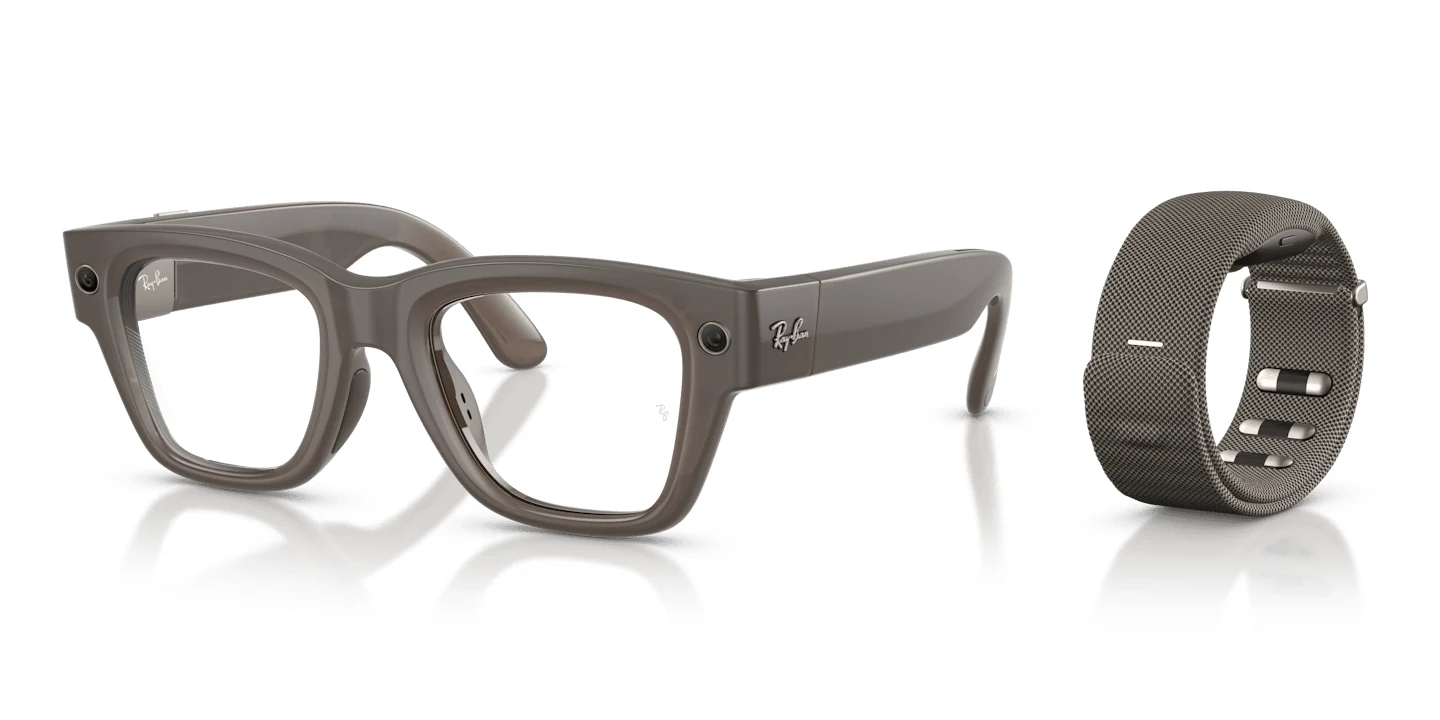
Specifications and UK details
- Display
- 600 × 600 colour panel in the right lens
- Camera
- 12MP with viewfinder; retailer lists video up to 1440 × 1920 at 30fps
- Audio
- Open-ear speakers; six microphones
- Controls
- Meta Neural Band included, plus frame touchpad and voice
- Battery claim
- Up to 6 hours mixed use; up to 30 hours total including case
- Confirmed UK navigation
- Pedestrian directions: London and Manchester
- Translation in UK FAQ
- English, French, Italian and Spanish; download language packs
- Prescription / water
- −4.00 to +4.00 total power through certified retailers; IPX4
- Phone
- Meta AI app and account; compatible iPhone/Android; check current app requirements
Reasons to consider
- Readable captions and camera preview in the lens
- Screen, camera and speakers in one pair
- Neural Band offers a gesture-control option
- London and Manchester navigation explicitly named in UK support
Before you choose
- £749 listed price before any additional prescription costs
- Wider UK pedestrian coverage is not confirmed
- Glasses and wrist band both need charging and fitting
- Shorter mixed-use battery claim than ordinary Gen 3
Meta Ray-Ban Display offer something the ordinary Ray-Ban Meta range cannot: information you can read in the lens. Captions, a camera preview and supported walking directions make them an intriguing step forward for anyone who has wanted more than spoken replies.
They also cost considerably more. Vision Express lists a UK configuration at £749, including the Neural Band, and the range of confirmed British features still needs careful reading. We’d approach these as a pair to try in a shop with a few specific jobs in mind.
The strongest reason to buy is that you want the display often enough to justify the price and the extra equipment. If you mainly want photos and music, the simpler Ray-Ban Meta models deserve a close look first.
A small colour display, in the right lens
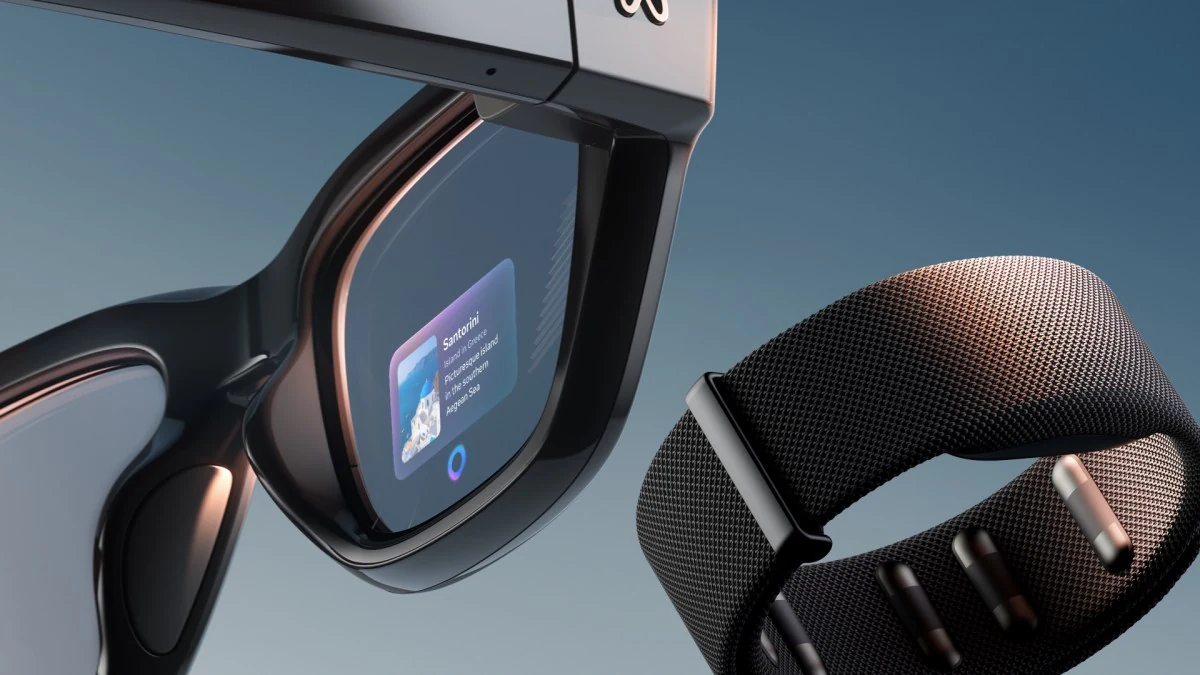
The display is a 600 × 600 colour panel visible through the right lens. It is intended for brief information you can glance at while remaining aware of the world around you. It isn’t the sort of large virtual screen you would buy for watching films or playing games at home.
That restrained approach makes sense for everyday glasses. Reading a message or checking the next instruction could save a phone check. It also gives you something audio alone cannot offer: the option to look back at the words rather than ask for them to be repeated.
A demonstration is particularly valuable here. Check whether the display sits comfortably in your view, whether you can read it with your prescription, and how easy it is to return your attention to what is in front of you. The UK support guide describes brightness and display-tilt adjustments, but a specification cannot tell you how the arrangement will feel to your eyes.
The Neural Band adds another thing to wear
The included Meta Neural Band reads muscle activity at the wrist to recognise hand gestures. Those gestures let you select items and control the interface without repeatedly reaching for the glasses. It does not read your thoughts.
Small movements could be more comfortable and less conspicuous than speaking every command aloud. They may also take practice. We would want a shop demonstration to include scrolling, selecting an item and correcting a mistaken action, rather than just watching a prepared example.
The band has its own sizing and charging requirements. Try it alongside any watch you normally wear and confirm the correct size with the retailer. The frame’s touchpad provides another control route, which is useful when a wrist gesture is inconvenient.
Walking navigation in Britain: London and Manchester
Ray-Ban’s UK FAQ explicitly lists London and Manchester for pedestrian navigation. That is the confirmed British coverage we found on 10 October. It is useful progress for those cities, but it does not establish support across the rest of the country.
The Meta AI app needs precise location permission set to always on for local search and navigation. You should be comfortable with that requirement before counting directions as a daily feature.
If you live in Birmingham or spend weekends walking rural trails, don’t buy on the assumption that the same in-lens navigation is ready for your routes. Equally, British buyers don’t need a VPN to turn London and Manchester into supported cities: they are already named in the UK documentation. Our maintained UK Display guide covers the regional position in more detail.
Captions and translation make a stronger everyday case
The UK FAQ describes translation between English, French, Italian and Spanish, with language packs downloaded through the app. The other person’s translated speech can appear in the display; your response can be shown or played through the phone.
Being able to read the words while looking towards the speaker is a persuasive use for a lens display. Captions could also be useful when following a conversation is difficult. A demonstration with ordinary speech is more informative than a polished translation video, especially if you have a particular accessibility need.
We’d try interruptions, a little background noise and the language pair you actually expect to use. Transcription and translation errors can change the sense of a sentence, so important details still need checking with the other person. The benefit is the help the glasses can provide, rather than a promise of faultless conversation.
Ray-Ban also documents screen-reader, magnification and colour-correction controls. Those are welcome options, although their suitability will depend on the wearer. Our accessibility guide offers a broader starting point.
A viewfinder changes the camera experience
The 12MP camera has an in-lens preview, so you can see the framing before and during capture. That is a meaningful difference from ordinary camera glasses, where you learn how the camera’s viewpoint relates to where you are looking.
Vision Express lists video at up to 1440 × 1920 pixels at 30fps. Buyers comparing the Display name with Gen 3 should notice that: the more expensive model does not automatically have the highest video-resolution specification. Here, the screen and controls are part of what you are paying for.
The capture light is still there, and recorded media is imported through the Meta AI app. The screen does not make filming less of a privacy consideration. It simply gives the wearer a more useful way to compose the shot.
Music, battery and the cost of doing more
Display also include open-ear speakers and six microphones for calls, audio and AI interaction. That makes them a more complete hardware package than camera-free display glasses without speakers, but it also gives you more ways to use up the battery.
The advertised figures are up to six hours of mixed use and up to 30 hours in total with the charging case. The latter includes the glasses’ own charge; it is not another 30 hours on top. Long sessions with demanding functions may fall well short of the mixed-use headline.
For workdays, the practical question is when you can charge both the glasses and the band. Prescription wearers should think that through before expecting the pair to replace ordinary spectacles from breakfast to bedtime.
UK buying and the alternatives
On 10 October, Vision Express listed the large brown Transitions model at £749, with a store-finder route rather than an online checkout button. Check stock, demonstrations and the finished lens price with a participating store. A listed price alone doesn’t tell us which branch can supply a pair today.
Ray-Ban quotes prescription eligibility of −4.00 to +4.00 total power through participating certified retailers. That range is a starting point for an optician to check, rather than a guarantee for every prescription. The glasses are IPX4 splash resistant and should not be submerged.
You also need a compatible phone, the Meta AI app and a Meta account. Vision Express lists iOS 15.2 or Android 10 minimum; check the current app requirements and your exact handset before ordering, as software support can move beyond a retailer’s specification table.
We’d choose Gen 3 for a simpler camera-and-audio purchase, and compare Even G2 or RayNeo iO if camera-free captions and prompts are the priority. Display make their strongest case when you want the screen, camera and speakers together, and their confirmed UK functions match your routine.
AIWearHQ verdict
Display are the pair we’d investigate if captions, a viewfinder and information in view would genuinely change how we use glasses. The combination is exciting, but £749 deserves a demonstration with your own needs in mind. Check the screen, band fit and confirmed UK functions; buyers mainly interested in music and casual photography can spend less elsewhere.
Your questions answered
Does navigation work throughout Britain?
The UK FAQ explicitly names London and Manchester for pedestrian navigation. We have not established broader UK coverage.
Do I need a VPN for those supported cities?
No VPN requirement is listed for London or Manchester. The app needs precise location permission set to always on, alongside the normal supported-device and account setup.
Is the Neural Band included in £749?
Yes. The checked Vision Express listing includes the band, the glasses’ charging case and the relevant charging accessories. Confirm band size when ordering.
Will they work with prescription lenses?
Ray-Ban lists −4.00 to +4.00 total power through participating certified retailers. An optician needs to confirm your prescription and fitting.
Are they gaming or cinema glasses?
No. The small right-lens display is designed for glanceable information and supported functions such as captions and the camera preview.
Sources and research
Manufacturer and retailer information checked for this assessment. Editorial judgements are ours; no hands-on performance results are claimed.